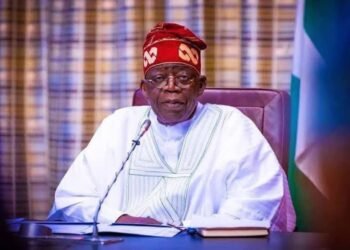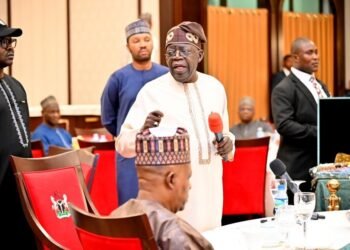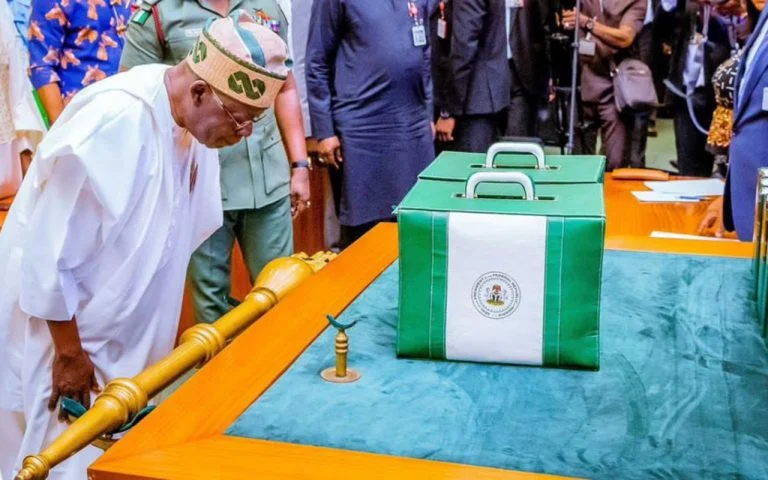
President Bola Ahmed Tinubu has submitted the ₦58.18 trillion 2026 Appropriation Bill to a joint session of the National Assembly, outlining a comprehensive plan to boost Nigeria’s economy, strengthen security, and improve living standards.
Dubbed “The Budget of Consolidation, Renewed Resilience and Shared Prosperity,” the proposal underscores the administration’s commitment to fiscal discipline, economic reforms, and national stability.
Speaking in Abuja on Friday, Tinubu acknowledged the economic difficulties Nigerians faced over the past two and a half years but highlighted signs of recovery. He noted that GDP growth reached 3.98 per cent in the third quarter of 2025, inflation has fallen for eight consecutive months to 14.45 per cent in November, and external reserves have risen to $47 billion—the highest in seven years—covering more than ten months of imports.
The 2026 budget projects total revenue of ₦34.33 trillion and total expenditure of ₦58.18 trillion. Debt servicing will consume ₦15.52 trillion, non-debt recurrent expenditure is set at ₦15.25 trillion, and capital spending is estimated at ₦26.08 trillion. The budget deficit is pegged at ₦23.85 trillion, equivalent to 4.28 per cent of GDP. Fiscal assumptions include a crude oil price of $64.85 per barrel, daily production of 1.84 million barrels, and an exchange rate of ₦1,400 to the dollar.
Security is the top priority, receiving ₦5.41 trillion, followed by infrastructure (₦3.56 trillion), education (₦3.52 trillion), and health (₦2.48 trillion). Tinubu stressed a tougher national security stance, declaring that all armed groups operating outside government authority—including bandits, kidnappers, militias, violent cult groups, and their sponsors—would be classified as terrorists and face decisive action.
The President also promised stricter budget implementation, directing ministries, departments, and government agencies to meet revenue targets and eliminate leakages through full digitisation.
Other key investments include education, healthcare, and agriculture. Over 418,000 students have benefited from the education loan scheme, while agricultural reforms will focus on mechanisation, irrigation, and food security.
Tinubu urged lawmakers to support the budget, stressing that effective cooperation between the executive and legislature is essential for delivering the Renewed Hope Agenda.
“The true value of a budget is not in its announcement, but in its delivery,” he said as he formally laid the bill before the National Assembly.