

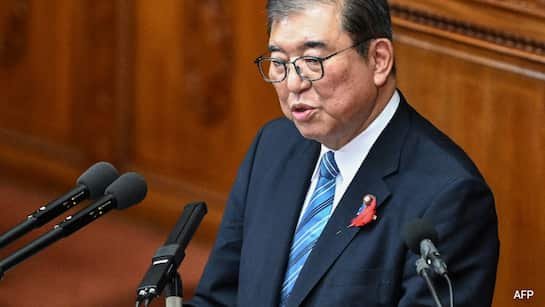
Japan’s Prime Minister Shigeru Ishiba has announced he will resign after less than a year in office, following two significant election defeats.
The decision comes a day ahead of a planned vote within his Liberal Democratic Party (LDP) that could have triggered his ouster. The LDP, which has dominated Japanese politics for most of the past 70 years, lost its majority in the lower house for the first time in 15 years under Ishiba and then lost control of the upper house in July.
Japan, the world’s fourth-largest economy and a key US ally, now faces political uncertainty amid rising regional tensions with China.
“Now that a conclusion has been reached in the negotiations concerning the US tariff measures, I believe this is precisely the appropriate time,” Ishiba said, referring to last week’s deal that eased tariffs imposed by US President Donald Trump on Japanese cars and other exports.
Until recently, Ishiba had resisted calls to step down, insisting it was his responsibility to resolve the dispute with Washington first. “I have strongly believed that negotiations concerning the US tariff measures, which could be described as a national crisis, must be brought to a conclusion under our administration's responsibility,” he said.
The 68-year-old confirmed he would continue his duties “to the people” until a successor is chosen. The LDP will now select a new leader, who will automatically become prime minister after a parliamentary vote.
Ishiba, who assumed office in October 2024 promising to tackle rising living costs, struggled to win public confidence amid economic challenges, a cost-of-living crisis, and tense relations with the US. Inflation, including the doubling of rice prices over the past year, further eroded support.
His administration also faced criticism over political missteps, including appointing only two women to his cabinet and distributing expensive gifts to party members, which contributed to his declining popularity.