

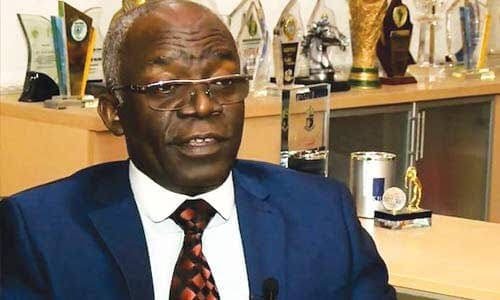
Human rights lawyer and Senior Advocate of Nigeria, Femi Falana, has accused the World Bank and the International Monetary Fund (IMF) of compelling Nigeria to remove petrol subsidies.
Speaking on Channels Television’s Sunday Politics, Falana maintained that no country in the world has completely eliminated subsidies and argued that the move was not Nigeria’s independent decision but an externally imposed condition.
“There’s no way you can remove subsidies completely; no country in the entire world has abolished subsidies completely,” he said. “Even leading Western countries like the United States, the United Kingdom, France and others subsidise electricity, agriculture and many aspects of people’s lives. It was the World Bank and the IMF that insisted the government must remove all subsidies.”
President Bola Tinubu declared the removal of petrol subsidies on May 29, 2023, during his inauguration. Shortly after, the Central Bank of Nigeria unified the foreign exchange market.
These twin policies have fueled record inflation, driving up living costs and worsening economic hardship for millions of Nigerians.
Falana also criticised the government’s proposal to introduce a new five percent fuel surcharge. He argued that before imposing fresh taxes, authorities should account for funds already owed to the Federal Roads Maintenance Agency (FERMA).
He cited Section 14 of the FERMA Act 2007, which mandates a five percent user charge on fuel sales, with 40 percent allocated to federal roads and 60 percent to state roads. According to him, the provision has never been implemented.
“Between 2007 and 2011, FERMA confirmed that no funds were remitted despite deductions from petrol prices at source,” he said. “By 2022, even the Senate confirmed that over one trillion naira was owed to FERMA. Before introducing new levies, the government must tell Nigerians what happened to the earlier deductions.”
He warned that imposing a new surcharge could lead to multiple taxation, further straining citizens already grappling with economic hardship.
Falana also called for an end to the “dollarisation” of the economy, stressing that rejecting the naira for local transactions remains a criminal offence.