

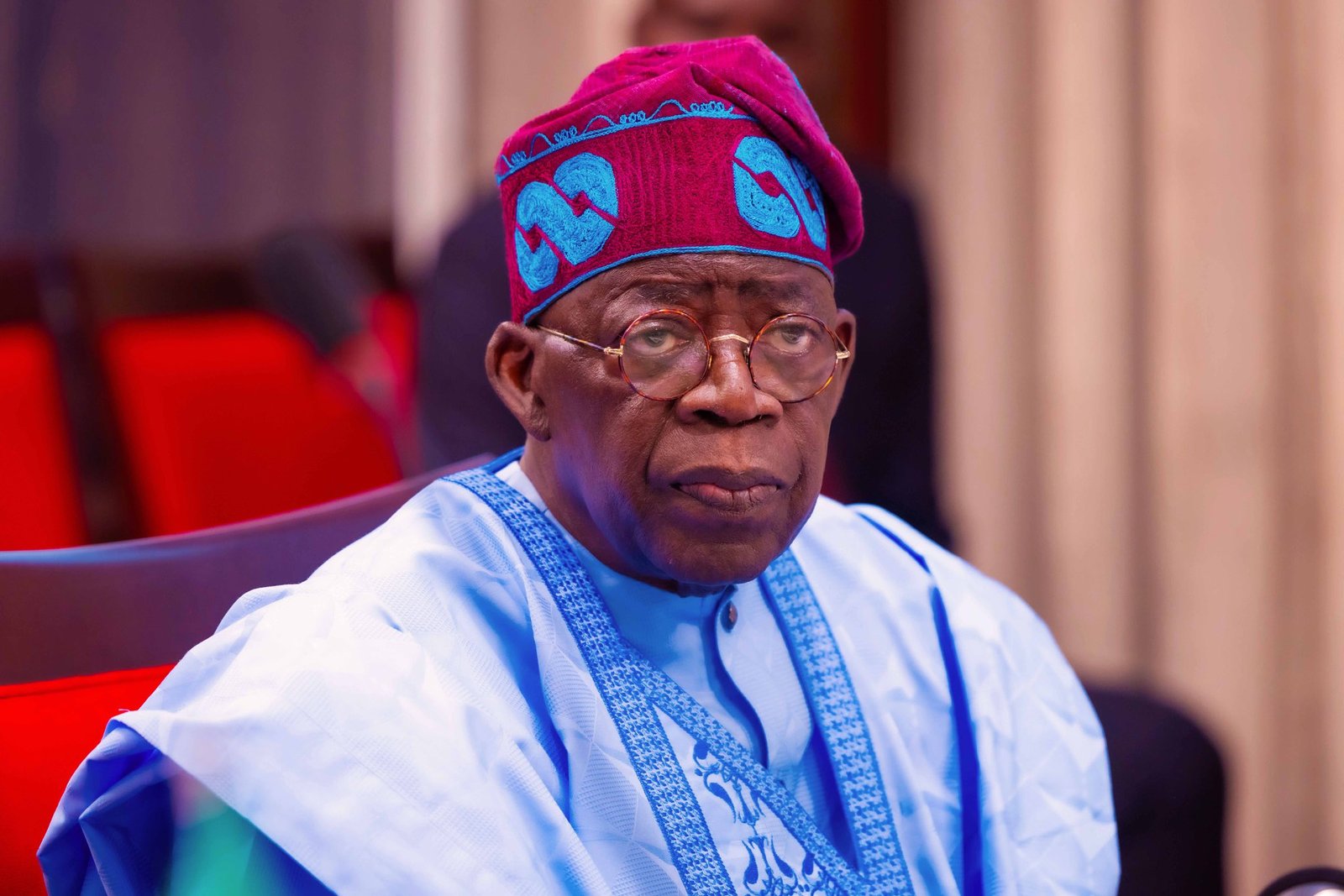
The Presidency has rejected the World Bank’s latest report estimating that 139 million Nigerians are living in poverty, describing the figure as “unrealistic” and detached from the country’s economic situation.
In a statement released on Wednesday, President Bola Tinubu’s Special Adviser on Media and Public Communication, Sunday Dare, said while Nigeria values its partnership with the World Bank, the poverty figures must be viewed in proper context and not taken as an exact headcount.
“While Nigeria values its partnership with the World Bank and appreciates its contributions to policy analysis, the figure quoted must be properly contextualised. It is unrealistic,” Dare stated on his official X handle.
According to the Presidency, the 139 million figure was derived from the World Bank’s global poverty line of $2.15 per person per day, based on 2017 Purchasing Power Parity (PPP), and does not represent real-time income conditions in Nigeria.
The statement noted that the global poverty benchmark, when converted into local currency, equates to about N100,000 per month at current exchange rates — a figure higher than Nigeria’s new minimum wage of N70,000.
“There must be caution against interpreting the World Bank’s numbers as a literal headcount,” it said, adding that PPP-based poverty measures rely on historical data and often ignore Nigeria’s large informal and subsistence economies that support millions of households.
The Presidency said the government sees the report as a modelled global projection rather than an accurate reflection of living conditions in 2025. It stressed that Nigeria’s focus remains on economic recovery and reforms aimed at inclusive growth.
According to Dare, the Tinubu administration has expanded welfare programmes to cushion the impact of reforms and uplift vulnerable citizens. These include the Conditional Cash Transfer scheme — now reaching up to 15 million households with over N297 billion disbursed since 2023 — and the Renewed Hope Ward Development Programme, which targets all 8,809 wards with micro-projects and community services.
Other initiatives highlighted include the strengthening of the National Social Investment Programmes (such as N-Power, GEEP microloans, and the Home-Grown School Feeding Programme), food security drives with subsidised grains and fertilisers, the Renewed Hope Infrastructure Fund, and the National Credit Guarantee Company, which provides affordable loans for small businesses and young entrepreneurs.
The Presidency said these interventions form part of broader efforts to address structural distortions that have hindered growth for decades. It described policies such as fuel subsidy removal and exchange rate unification as “painful but necessary” steps to stabilise the economy and tackle the roots of poverty.
It also referenced recent acknowledgements by World Bank officials that Nigeria’s economic reforms are beginning to restore macroeconomic stability, boost revenues, and strengthen the naira.
However, the statement emphasised that real progress will be measured by how much these reforms improve the lives of citizens. The government said it is investing heavily in agriculture, manufacturing, power supply, and skill development to generate jobs and ease living costs.
“Nigerians should begin to feel visible improvements in food prices, income, and purchasing power as these programmes take effect,” the statement said.
The Presidency added that all welfare schemes are being integrated under a unified, data-driven framework to ensure transparency, accountability, and inclusion of all vulnerable communities.
“Nigeria rejects exaggerated statistical interpretations detached from local realities,” the statement concluded. “President Tinubu remains committed to building a resilient, inclusive economy where growth translates into real improvements in living standards.”
Earlier, the World Bank, in its October 2025 Nigeria Development Update titled From Policy to People: Bringing the Reform Gains Home, warned that about 139 million Nigerians are living in poverty despite recent economic reforms.
World Bank Country Director for Nigeria, Mathew Verghis, commended the Tinubu administration’s fiscal and monetary reforms but noted that many Nigerians are still struggling with declining purchasing power.
“In 2025, we estimate that 139 million Nigerians live in poverty,” Verghis said, adding that poverty levels have risen sharply from 129 million in April 2025 and 87 million in 2023, underscoring the ongoing hardship among households despite macroeconomic stability gains.