

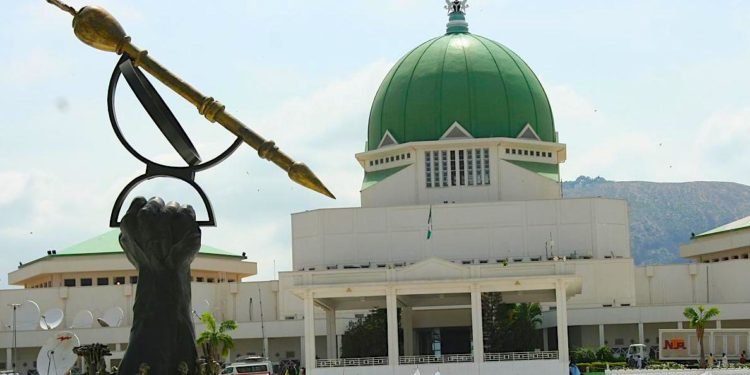
The National Assembly has proposed moving Nigeria’s next general elections to November 2026, six months earlier than the usual February schedule.
The proposal is part of the Electoral Act (Amendment) Bill 2025, presented on Monday during a joint public hearing by the Senate and House Committees on Electoral Matters in Abuja. The bill seeks to repeal the 2022 Electoral Act and replace it with a new Electoral Act 2025. Lawmakers, civil society groups, and other stakeholders attended the one-day session.
Under the draft amendment, “Elections into the office of the President and Governor of a State shall be held not later than 185 days before the expiration of the term of office of the last holder of the office.” The change is intended to ensure all election-related litigations are resolved before the May 29, 2027 handover.
“The above provisions are to ensure that all litigations are concluded before swearing in,” the draft document states.
However, lawmakers cautioned that simply changing the election date may not suffice unless the judiciary is strengthened to handle the increasing number of election cases. The joint committee asked, “In a situation where a rerun is ordered by the Supreme Court at the end of 185 days, can we have vacancy in the office of the President?” highlighting the need to address judicial capacity challenges.
If approved, presidential and governorship elections would take place in November 2026, roughly six months before the current administration’s term ends.
Other key proposals in the bill include allowing inmates to vote, early voting for Nigerians in the diaspora, linking voter registration to the National Identification Number (NIN), and mandatory electronic transmission of results.
The amendment also seeks significant changes to voter identification. According to the draft, “The use of the Permanent Voter Card (PVC) will not be compulsory, since the Bimodal Voter Accreditation System (BVAS) does not recognise the microchip in the PVC.” Every registered voter would be able to “download and print his voter’s card whenever the need arises.”
Lawmakers said this measure would curb the buying and selling of PVCs that have undermined past elections and make voter verification fully digital. The draft reflects adjustments in Sections 18 and 47 and the deletion of Section 22 of the existing Electoral Act.