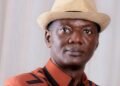
Adedeji Adeleke, father of Afrobeats star Davido, has said DNA tests confirm that 12-year-old Anuoluwapo is not the singer’s child, describing recent paternity claims as “unnecessary.”
Speaking at a press conference in Lagos on Wednesday, Mr Adeleke said while his son cannot take responsibility for a child who is not biologically his, “Anu deserves to know her father.” He revealed that “five DNA tests have been done to verify the paternity claim, but all of them have proved otherwise.”
Despite the results, Adeleke said he has supported the girl over the years. “I often send money for Anu’s school fees and her upkeep,” he said. He explained that her aunt always provided receipts and evidence of purchases made for the 12-year-old. “Up until last year, I sorted out the school fees while I stayed in touch with Anu’s aunt. This, Davido did not know about. I did not discuss it with David or anybody,” he added.
The paternity dispute resurfaced in mid-January after Anu allegedly appealed on Instagram for a fresh DNA test, citing years of bullying and mental distress over claims that Davido was her father. Davido has denied paternity, saying multiple DNA tests at different hospitals have returned negative results. A leaked chat purportedly showed him threatening legal action against the child’s mother if the issue continued.
Anu’s mother, Ayotomide Labinjoh, disputed Davido’s claims about multiple tests. She said, “only one DNA test was conducted,” alleging that the 2014 test “was compromised at a clinic.” She requested a new, independent DNA test, supervised by the U.S. Embassy or State Department, citing Davido’s U.S. citizenship, to ensure transparency.
Dr Adeleke gave further details of the case, explaining that he first became aware of the claim in 2014 after receiving a DHL package from Ibadan containing photographs of Davido and the child, a birth certificate listing “Adeleke David” as the father, and a letter from the child’s grandmother. He said the grandmother sought only confirmation of paternity and responsibility.
“She said her eldest daughter informed her that David Adeleke was responsible for her pregnancy after meeting him when he came to Ibadan for a show. She said her daughter gave birth to a baby girl and asked that David step up for a paternity test. She stated clearly that she was not asking David to marry her daughter, only to confirm paternity and take responsibility if confirmed,” Adeleke said.
He arranged a DNA test at Vedic Lifecare Hospital in Lagos, with samples analyzed in South Africa. “Immediately I read the letter, even before speaking to David, I called the woman. I told her I hadn’t spoken to my son yet, but if the child was truly my granddaughter, she had no problem with me. I would welcome her into my family happily,” he said.
Describing the test process, he said: “Only David, myself, the grandmother, the mother, and the child were allowed into the room. Samples were taken using saliva, not blood, and sealed for analysis.” The result showed a 0.00 percent match, conclusively excluding Davido as the father. “The DNA profile is clear. DNA will not change even if it is done ten times,” he said.
To eliminate any doubt, Adeleke offered two additional tests at other reputable centers, covering accommodation and logistics for the family. “The grandmother broke down and cried. I told her mistakes could happen and suggested we do two more DNA tests at other reputable centres. I offered to keep them in Lagos for a week at my expense so additional tests could be carried out.” All tests returned the same result.
On calls for the DNA results to be made public, he said, “It is dangerous for anyone’s DNA profile to be in the public domain.” He added, “What is one more? Is it that I cannot afford to take care of her? But there is science. And science is clear.”
He also accused social media personality Kemi Olunloyo of impersonating the girl online and spreading false information about his family. “She says she was my wife’s best friend. How can that be? I never met her,” he said.
Concluding, Adeleke urged the public to ignore online narratives about the case, calling them “misleading and driven by impersonation and misinformation.