The Federal Government said on Monday that its recent diplomatic disagreement with the United States, during which President Donald Trump threatened military action over alleged killings of Christians, “has been largely resolved”.
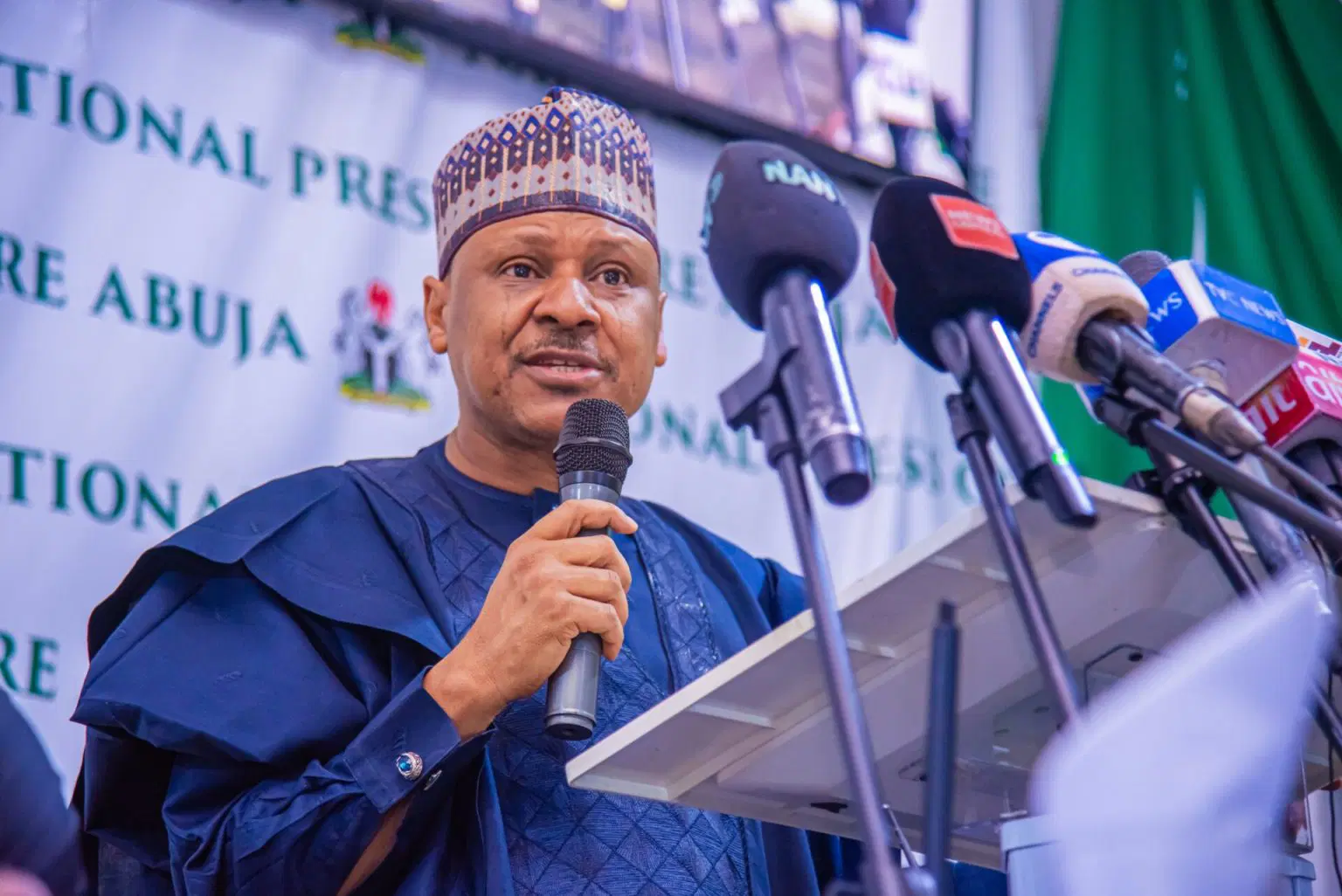
“The recent diplomatic spat with the United States has been largely resolved through a firm, respectful engagement culminating in a strengthened partnership between America and Nigeria,” the Minister of Information, Mohammed Idris, said at a year-end press briefing in Abuja.
Recall that Trump had issued warnings to Nigeria in October and November, claiming that Nigerian Christians were facing an “existential threat” that amounted to “genocide” amid the country’s numerous armed conflicts.
The diplomatic pressure was welcomed by some observers but viewed by others as potentially stoking religious tensions in Africa’s most populous nation, which has previously experienced episodes of sectarian violence.
Nigeria’s government and independent analysts have rejected portraying the country’s insecurity as religious persecution, a narrative often promoted by the Christian right in the United States and Europe, as well as by Nigerian separatist groups that maintain lobbying efforts in Washington.
Idris’s remarks followed Nigeria’s hosting of a United States congressional delegation earlier this month.
However, Nigeria remains on Washington’s list of countries of “particular concern” over alleged violations of religious freedom.
In addition, Nigeria was among the countries affected last week by visa and immigration restrictions announced by the Trump administration.
Despite this, there are indications of growing security cooperation, with analysts also monitoring an increase in US reconnaissance flights over known jihadist forest strongholds.
Nigeria’s various armed conflicts are complex and have claimed the lives of both Muslim and Christian civilians, often without distinction.
The country continues to battle a long-running jihadist insurgency in the northeast, as well as armed bandit groups in the northwest that raid villages and carry out kidnappings for ransom.
In central Nigeria, clashes frequently occur between predominantly Muslim herders and mostly Christian farmers, although experts say the violence is driven by competition over land and resources rather than religion.
Speaking further with journalists, Idris also defended a recent aid agreement under which Washington will contribute $2.1 billion, which the State Department described as having “a strong emphasis on promoting Christian faith-based health care providers.”
“Every Nigerian is going to be a beneficiary of this arrangement,” Idris said.