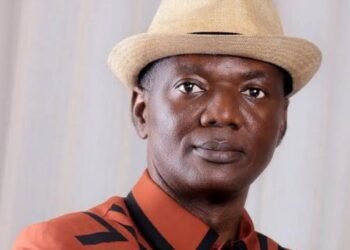
The Economic and Financial Crimes Commission has detained a former Attorney-General of the Federation and Minister of Justice, Abubakar Malami (SAN), over allegations of terrorism financing.
The former Minister is also expected to address issues linked to money laundering, including the operation of suspicious accounts.
Malami has been directed to explain his investment of about N10 billion in Kebbi State, as well as the whereabouts of the $322 million Abacha loot recovered from Switzerland and roughly $22 million from the Island of Jersey in the United Kingdom.
As of 10 pm on Tuesday, the EFCC was still holding Malami because he had not met his bail requirements.
However, the ex-AGF stated that his public record in office contradicts any suggestion of involvement in terrorism financing.
A senior EFCC official said numerous allegations against Malami would take several days to review.
The source said: “We have detained the ex-Minister for terrorism financing and the whereabouts of Abacha loot recovered from Switzerland and the Island of Jersey in the UK.
“His sudden wealth of N10billion investments in Kebbi State is under investigation. We may attach some of these assets.
“We are likely to interrogate one of his wives on her role in the N4billion Anchor Borrowers cash advanced by the Central Bank of Nigeria (CBN).
“He has a lot to clarify, but he has not been able to meet bail conditions. He might be with us until he fulfils these.”
Malami, however, rejected the allegations of terrorism financing.
He referenced his significant involvement in Nigeria’s AML/CFT reforms and the country’s removal from the FATF Grey List to dismiss the terrorism financing claims.
In a statement on X, Malami wrote: “My attention has been drawn to a recent publication in which my name was mentioned in connection with allegations of terrorism financing and so-called ‘links’ to persons described as terror suspects or alleged financiers.
“I consider it necessary, in the interest of truth, justice and public record, to make the following clarifications.
“First, I state clearly and unequivocally that I have never at any time been accused, invited, interrogated, investigated or charged by any security, law-enforcement, regulatory or intelligence agency—within or outside Nigeria—in respect of terrorism financing or any related offence.
“Secondly, even the retired military officer cited as the principal source in the said publication categorically admitted that he was not accusing me, or other named individuals, of financing terrorism.
“His own account, as reported, was limited to a vague assertion that certain suspects allegedly had some form of “business” or “institutional” relationship with various persons.
“That important clarification was, unfortunately, overshadowed by a headline and framing capable of misleading well-meaning members of the public into drawing inaccurate and damaging conclusions, which were unfortunately politically manipulated by my political opponents to create mischievous insinuations implying my involvement in terrorism financing.
“Terrorism financing is a grave crime with devastating consequences for national security and human life. Any attempt—whether by direct allegation or indirect innuendo—to associate an individual with such an offence must be grounded in verifiable facts, due process and lawful findings, not in conjecture, speculation, or guilt by association. To suggest that lawful professional or institutional engagements can, without more, be read as evidence of terrorism financing is both mischievous and unjust.
“For the avoidance of doubt, my public record in office stands in direct contradiction to any insinuation of complicity in terrorism financing. During my tenure as Attorney-General of the Federation and Minister of Justice, I worked with other arms of government and relevant institutions to strengthen—not weaken—Nigeria’s legal and institutional framework against money laundering and the financing of terrorism.
“Among other efforts:
●The Federal Government, through collaborative work involving the Federal Ministry of Justice, the National Assembly and other stakeholders, established an independent Nigerian Financial Intelligence Unit (NFIU) by law, in order to meet global standards on operational autonomy and to restore Nigeria’s standing within the international financial intelligence community.
●We supported and saw to the enactment of the Money Laundering (Prevention and Prohibition) Act, 2022, which repealed the older Money Laundering (Prohibition) Act and provided a more comprehensive and stringent framework for combating money laundering and related offences, including those that may underpin terrorism financing.
●We similarly worked on the passage and implementation of the Terrorism (Prevention and Prohibition) Act, 2022, which strengthened Nigeria’s legal regime against terrorism, updated offences and penalties, and reinforced provisions dealing specifically with the financing of terrorism in line with international standards and United Nations obligations.
●In furtherance of these laws, my office cooperated closely with key domestic institutions—such as the NFIU, the Central Bank of Nigeria, law-enforcement and regulatory agencies—and with international partners, to improve coordination, information-sharing and compliance across the anti-money-laundering and counter-terrorism-financing (AML/CFT) architecture.”