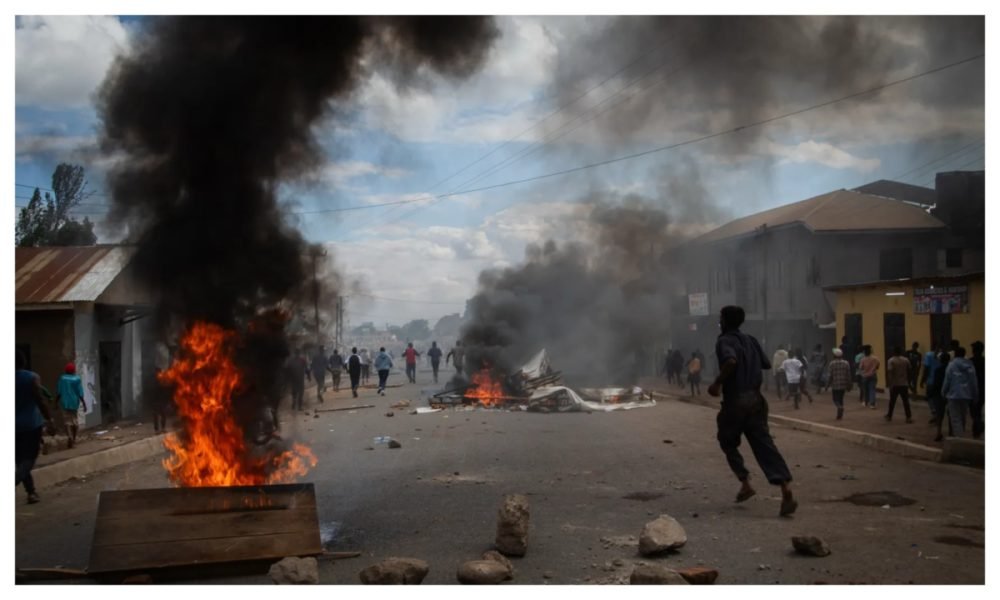
Tanzania is facing a severe crisis after days of unrest following Wednesday’s elections, with the main opposition claiming that hundreds have died, while the government maintains no excessive force has been used. The country remained under an internet blackout on Friday, making independent verification difficult.
A security official and a diplomat in Dar es Salaam told AFP that deaths could number in the “hundreds” as protests continued. President Samia Suluhu Hassan had sought a strong victory to consolidate her position and silence critics within her party, with key challengers either jailed or barred from running.
The elections quickly spiraled into chaos. Protesters in Dar es Salaam and other cities tore down campaign posters, attacked police, and targeted polling stations. Authorities responded with curfews and a nationwide internet shutdown.
Foreign Minister Mahmoud Thabit Kombo said the government had “no figures” on deaths and insisted that “currently, no excessive force has been used.”
Chadema, the main opposition party, offered a drastically different account. Spokesman John Kitoka reported approximately 350 deaths in Dar es Salaam and over 200 in Mwanza, estimating a nationwide toll of around 700. He warned the number could rise further during the curfew hours. A security source suggested the total might reach 700–800.
With foreign journalists largely barred from the country and communications cut off, independent reporting has been limited. The United Nations cited “credible reports” of at least 10 deaths, while Amnesty International said it had information indicating at least 100 fatalities. Many hospitals and clinics refused to speak publicly out of fear.
Hassan has not publicly addressed the unrest, and local media have not posted updates since Wednesday. Army chief Jacob Mkunda described protesters as “criminals” late Thursday. In Zanzibar, Hassan’s CCM party was declared the winner of local elections, but the opposition ACT-Wazalendo rejected the results, accusing authorities of manipulating the vote and calling for a rerun.
Opposition officials claimed ballot box stuffing, multiple votes cast without identification, and the removal of election observers. Many residents in Zanzibar expressed fear, saying they could not speak openly due to potential reprisals.
Analysts say Hassan has faced resistance from parts of the military and allies of her late predecessor, John Magufuli, since assuming office in 2021. To secure a strong mandate, authorities banned Chadema and put its leader on trial for treason. Rights groups condemned a “wave of terror” in the lead-up to the elections, including a series of abductions.
Much of the public anger has focused on Hassan’s son, Abdul Halim Hafidh Ameir, accused of overseeing the crackdown. While ACT-Wazalendo was allowed to contest local elections in Zanzibar, its candidate was barred from running against Hassan on the mainland.