The Presidency increased the 2026 Federal Government budget from the initial N54.46 trillion in the Medium-Term Expenditure Framework (MTEF) to a new total of N58.18 trillion. This adjustment was made to accommodate the recent large-scale recruitment into the military, police, and other security agencies announced by President Bola Tinubu.
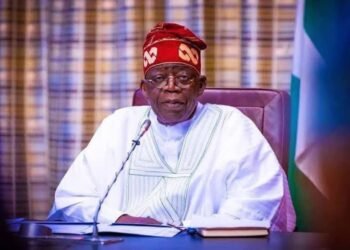
The Director-General of the Budget Office, Mr Tanimu Yakubu, revealed this figure after the Federal Executive Council (FEC) meeting on Friday, just hours before the president presented the budget to the National Assembly.
A source within the Presidency explained that the budget proposals from Ministries, Departments, and Agencies (MDAs) had already been submitted before the recruitment announcement. Therefore, it was necessary to raise the budget to cover the additional costs of the new security personnel.
The FEC meeting, held the previous Friday, lasted less than two hours and did not include detailed discussions on the budget. Mr Yakubu was subsequently instructed to brief the press at the State House to formalise the announcement.
The source added that President Tinubu hurriedly presented the budget to the National Assembly to demonstrate commitment to its swift approval, given the delayed budget process. The detailed budget work will continue after the presentation, including MDAs’ budget defence sessions.
The proposed total expenditure of N58.18 trillion for 2026 represents a six per cent increase over the 2025 budget estimate of N49.7 trillion.
This figure includes projected spending of N4.98 trillion for government-owned enterprises and N1.37 trillion allocated for grants and donor-funded projects.
Within the total spending, statutory transfers amount to N4.1 trillion, while debt service costs total N15.52 trillion. This includes N3.388 trillion set aside as a sinking fund to retire maturing debts owed to local contractors and creditors.
Personnel costs, including pensions, are projected at N10.75 trillion, of which N1.02 trillion is for government-owned enterprises. This is a seven per cent increase compared to the 2025 budget. Overhead costs are budgeted at N2.22 trillion.
Non-oil revenue has been increasing steadily and now accounts for approximately two-thirds of total government receipts, signalling a structural move away from oil dependency.
With projected revenue of N34.33 trillion against total expenditure of N58.18 trillion, the budget deficit is expected to be N23.85 trillion, or 4.28 per cent of GDP.
Recurrent non-debt spending is set at N15.25 trillion, while capital expenditure totals N26.08 trillion.
Security leads sectoral allocations with N5.41 trillion, followed by infrastructure at N3.56 trillion, education at N3.52 trillion, and health at N2.48 trillion.