Madagascar Plunges Into Military Rule After President Rajoelina’s Impeachment
Madagascar has entered a new era of military rule after an elite army unit seized power on Wednesday, hours after President Andry Rajoelina was impeached by parliament. The dramatic takeover, led by the CAPSAT military contingent, has sparked international condemnation and deepened political uncertainty in the Indian Ocean nation.
Colonel Michael Randrianirina, the commander of CAPSAT, has been confirmed as interim president by the constitutional court. In a televised address, he pledged to restore civilian rule within two years and insisted the military intervention was necessary to save the country from collapse.
“It wasn’t a coup, it was a case of taking responsibility because the country was on the brink of collapse,” Randrianirina said. He added that the transition period would last 18 to 24 months, during which a prime minister would be appointed and major institutions restructured.
The move comes amid days of mass protests in Antananarivo, where demonstrators — led by a youth-driven “Gen Z” movement — had demanded Rajoelina’s resignation over worsening living conditions and alleged corruption. The president’s current whereabouts remain unknown, with reports suggesting he may have fled the country.
Madagascar now joins a growing list of former French colonies in Africa — including Mali, Niger, Burkina Faso, Guinea, and Gabon — that have experienced military takeovers since 2020.
International reactions were swift. The African Union announced Madagascar’s immediate suspension, while the United Nations said it was “deeply concerned by the unconstitutional change of power.” France called for respect for democratic principles, and Germany urged all sides to act with restraint to avoid further instability.
The Southern African Development Community (SADC), where Rajoelina had been serving as rotating chair, also voiced alarm, warning that the crisis could undermine regional peace.
Despite the upheaval, the capital remained largely calm on Wednesday. Crowds gathered at the symbolic Place du 13 Mai — once the epicenter of clashes between protesters and security forces — where a concert was held to celebrate what many called a “new beginning.”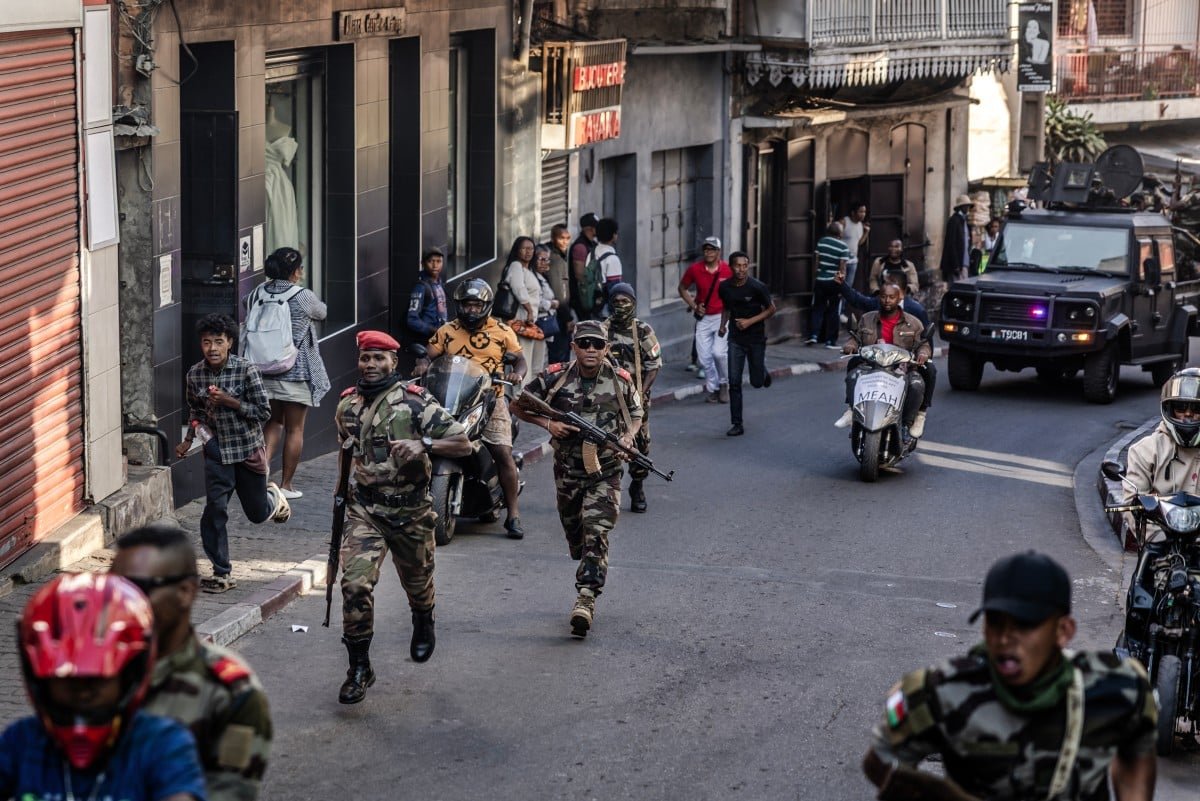
Members of the Gen Z movement welcomed Randrianirina’s rise, saying the army’s action reflected “the people’s call for systemic change.” The colonel also expressed willingness to engage with the youth and promised that their voices would shape the transition.
However, Rajoelina’s allies have denounced the events as an “attempted coup,” claiming the impeachment process and court ruling were unconstitutional. “This decision, tainted by irregularities, is illegal and destabilizing,” the presidency said in a statement.
Rajoelina, who came to power in a 2009 military-backed coup and was re-elected in 2023 after disputed polls, had faced mounting pressure to resign. In a recent address from an undisclosed location, he said he was in a “safe place to protect my life,” insisting he remained Madagascar’s legitimate president.
As Madagascar adjusts to another period of military rule, uncertainty looms over how the promised transition will unfold — and whether the country can avoid repeating its turbulent political past.