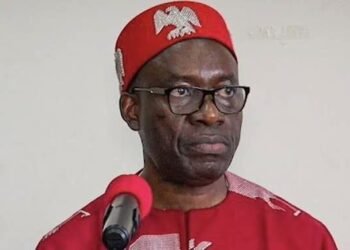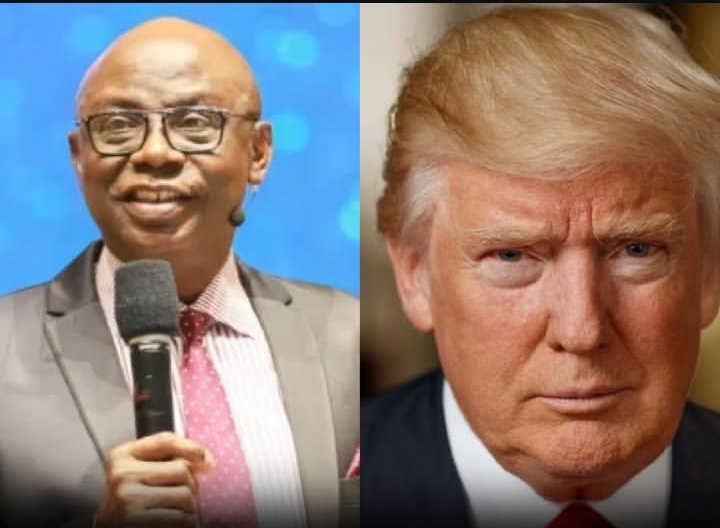
Tunde Bakare claims the Trump administration’s renewed focus on Nigeria is being driven not by humanitarian concerns but by America’s hunger for oil, mineral resources and dominance in future technologies.
Speaking in Lagos during his State of the Nation Address, the cleric said Trump’s style of leadership makes his interest in Nigeria “purely transactional,” insisting that the country’s natural wealth places it at the centre of Washington’s strategic calculations.
He linked this to America’s recent decision to redesignate Nigeria as a “Country of Particular Concern” on religious freedom, as well as Trump’s fresh remarks about violent attacks in the Middle Belt. Bakare said these moves should not be mistaken for moral outrage, but for geopolitical manoeuvring.
According to him, shortly after Trump won the 2024 election, he received a symbolic revelation indicating that Nigeria would become a major focus of the new US administration because of its place in global economic shifts.
He stressed that Nigeria’s oil, minerals and role in emerging tech supply chains make it a critical partner for any nation seeking economic leverage. He warned that external interference could worsen internal tensions if the Nigerian government responds emotionally instead of strategically.
Bakare described Trump as a leader whose aggressive rhetoric often masks an invitation to negotiate. He urged Abuja to engage with Washington using a clear economic agenda rather than political defensiveness.
He also pointed to Nigeria’s deepening security crises across the Middle Belt, North-West and South-East, saying communities under repeated attacks feel abandoned. He faulted the National Assembly and foreign affairs officials for reacting slowly and prioritising politics over national security.
Bakare said Nigeria’s path to stability must combine firm military operations with national reconciliation. His proposals included a victims’ register, a formal apology by President Bola Tinubu, community-driven policing under federal oversight, deployment of veterans and paramilitary personnel, heavier investment in surveillance technology and stronger security ties with the United States.