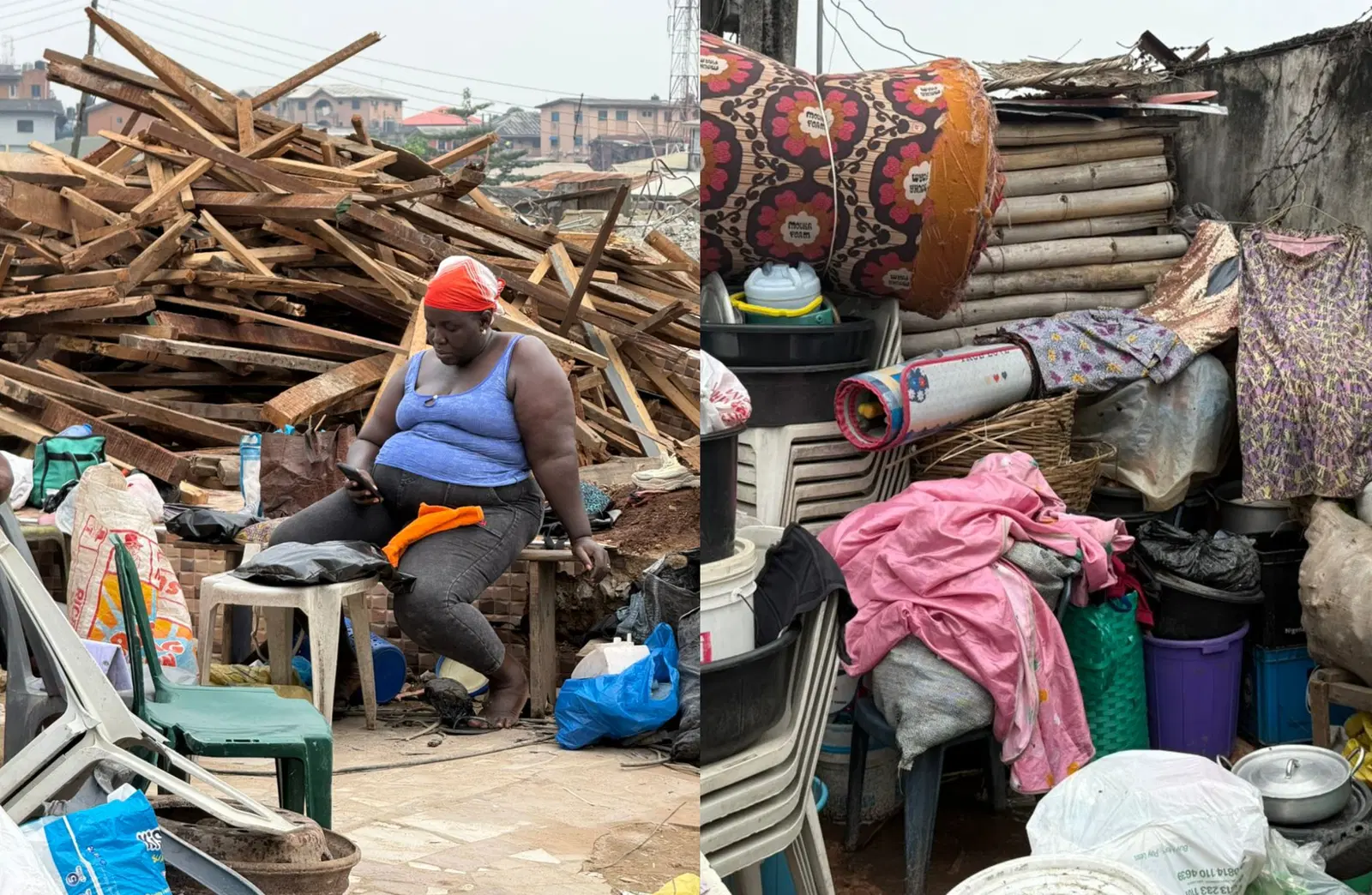
Several days after the Lagos State Government carried out a midnight demolition of the waterfront settlements along Tolu Alashe Street in the Oworonshoki area of Lagos State, numerous residents—mostly women and children—remain stranded in the open, without shelter, hope, or any place to go.
When the area was revisited yesterday, the once-bustling community had been reduced to rubble. Fragments of broken blocks, scattered roofing sheets, and abandoned household items now covered the dusty paths where hundreds of families had once lived and conducted their businesses peacefully.
Personal belongings were seen strewn across the area, with some women weeping as they searched for small items to sell. Among those sitting helplessly by the roadside was Mrs Rebecca, a mother of one, who revealed that she had contemplated suicide after losing her home, shop, and savings in the demolition. “I just came back from the hospital,” she began weakly, sitting beside a rusted pot and an old standing fan.
“I have a problem with my spinal cord, so, after a little treatment, I returned home that night, if I could sell a few things before my two-month-old rented house was demolished. I paid N360,000 for my two-room apartment. I just finished paying when they came at night and broke everything. I wanted to kill myself, but my sister stopped me.”
Rebecca, who previously earned a living selling cooked food, said she had started selling her remaining possessions, including her fan, to scrap buyers (“aboki”) for as little as N1,000 to feed herself and save for rent.
“I bought that fan for N35,000, but the aboki said N1,000. I don’t have a choice,” she said tearfully.
“I need money to eat, to treat myself. Everywhere I turn, there is no help.”
There were many aboki seen around the vicinity, negotiating with some women to buy their belongings.
Another affected resident, Mrs Jumai, who had lived in the community for ten years, recounted how she and her children barely escaped during the demolition night.
“They came about 11 p.m.,” she said.
“We were sleeping when our neighbours started shouting that the bulldozers were close. We carried what we could and ran out. My house and my shop, where I sell pepper soup and drinks, were in the same compound. They broke everything.”
Jumai explained that both her home and her children’s school were destroyed. “We stayed here with the school, and everything is gone. I don’t even know where to start their schooling again,” she lamented.