The world’s leading economies will gather in Johannesburg on November 22 and 23 for the G20 summit — the very first to be held on African soil.
Here are five key points to understand about this important annual meeting, set against a backdrop of rising global tensions and strained relations between Pretoria and Washington.
– First in Africa –
Established in 1999, the Group of 20 (G20) consists of 19 nations plus two regional organizations: the European Union and the African Union (AU).
South Africa holds the rotating presidency this year, marking the debut of the G20 summit on the African continent.
Together, G20 members account for 85 percent of the world’s GDP and about two-thirds of its population.
South Africa is Africa’s sole country in the group, although the AU joined as a collective member in 2023.
– ‘Solidarity, Equality, Sustainability’ –
South Africa has outlined its G20 presidency priorities as boosting disaster resilience, ensuring debt sustainability for low-income nations, financing a fair transition to clean energy, and leveraging critical minerals to foster inclusive growth and sustainable development.
The summit’s theme is “Solidarity, Equality, Sustainability.”
Rated by the World Bank as the world’s most unequal country, South Africa commissioned an expert panel, led by Nobel laureate economist Joseph Stiglitz, to study global wealth inequality and propose solutions for the summit.
The panel recommended establishing an intergovernmental body to confront the “inequality emergency” that leaves 2.3 billion people worldwide facing hunger.
– US boycott –
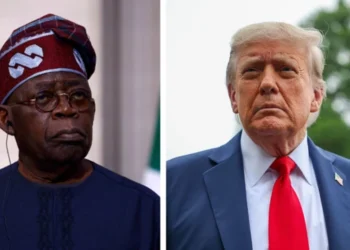
US President Donald Trump recently announced that no American officials would attend the summit, calling South Africa’s leadership of the G20 “a total disgrace.”
Since his return to the White House in January, Trump has singled out South Africa on several fronts, including false allegations of “white genocide” and imposing a 30 percent tariff—the highest in sub-Saharan Africa.
Though Washington’s boycott could hinder South Africa’s agenda, Pretoria dismissed the absence as the US’s loss and remains optimistic about a successful summit.
Argentina’s President Javier Milei, an ally of Trump, will also skip the event, sending his foreign minister instead.
Russian President Vladimir Putin will not attend, consistent with previous summits.
– Johannesburg in the spotlight –
The G20 summit will take place at the Nasrec Expo Centre, South Africa’s largest purpose-built venue for conferences.
Located near the famous Soweto township—a symbol of post-apartheid urban integration—the site regularly hosts major events like the African National Congress’s annual convention.
Adjacent to the centre is the stadium that hosted the 2010 FIFA World Cup final.
The event shines a light on Johannesburg, a city of around six million people with a complex legacy—from hosting Africa’s wealthiest square mile to struggling with deteriorating infrastructure, service failures, and governance issues.
Earlier this year, President Cyril Ramaphosa demanded urgent improvements, prompting the African Development Bank to approve a $139 million loan for upgrades.
– End of a ‘Global South’ run –
South Africa will hand over the G20 presidency to the United States, concluding a series of leadership from Global South countries, including Brazil, India, and Indonesia.
Trump has expressed intentions to drastically shrink the G20 platform, which has expanded over time to address social issues beyond its original financial mandate.
He also questioned whether South Africa should remain in the G20, casting uncertainty on the future of the group.