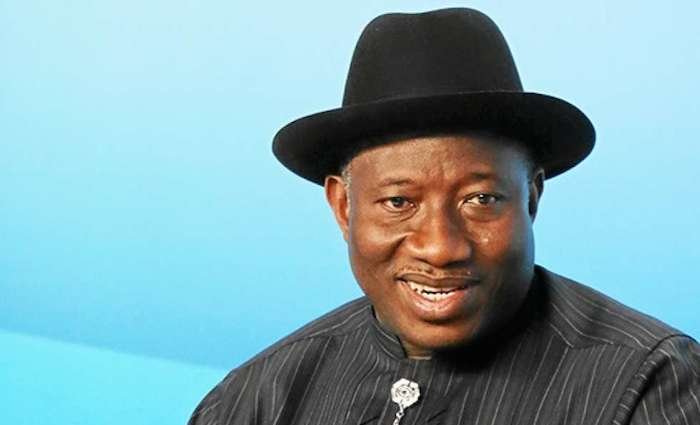
Former President Goodluck Jonathan has revealed that the recent military takeover in Guinea Bissau hurt him more deeply than his defeat to Muhammadu Buhari in the 2015 presidential election.
In a video interview, Jonathan expressed his distress over the coup, highlighting his long involvement in promoting democracy in Guinea Bissau.
He recalled his role as part of the West African Elders Forum, monitoring the country’s presidential and parliamentary elections when the military abruptly seized power, leaving him and his team stranded and worried for their safety.
Jonathan said, “What happened in Guinea Bissau is quite disturbing to me, a person who believes in democracy. In fact, I feel more pain than the day I called Buhari to congratulate him when I lost the election as a sitting president.”
He detailed his past efforts during his presidency to help stabilize Guinea Bissau, including involvement in the 2013 elections after a prolonged crisis.
Jonathan described the events as unusual, noting that the sitting President Umaro Embaló himself announced his own “arrest” and the coup while still communicating with international media, raising doubts about the official narrative.
According to Jonathan, election observers from ECOWAS, the African Union, and others reported peaceful polls, making Embaló’s announcement of a coup and detention all the more puzzling.
He said, “It is painful for me that President Embaló was the one announcing a military takeover of the government. It is totally unacceptable.”
Jonathan labelled the incident a “ceremonial coup” because Embaló declared it before the military formally took control.
He stressed that genuine coups do not involve the head of state freely using his phone and speaking to the media.
He urged against any violent resistance by the military and called on ECOWAS and the African Union to publish the full election results transparently.
Jonathan also demanded the release of opposition leader Fernando Dias from military custody, affirming his innocence.
Recounting his evacuation, Jonathan explained that while both Nigeria and Côte d’Ivoire prepared aircraft to rescue him and his team, the Ivorian government secured clearance first due to proximity and regional ties.
As the Ivorian plane was already en route, Nigeria was advised to stand down, leading Jonathan to return on the Ivorian aircraft, as confirmed by photos of his arrival.