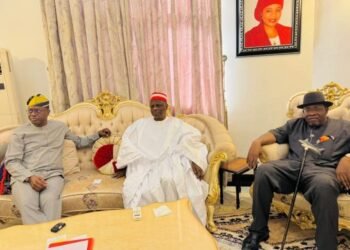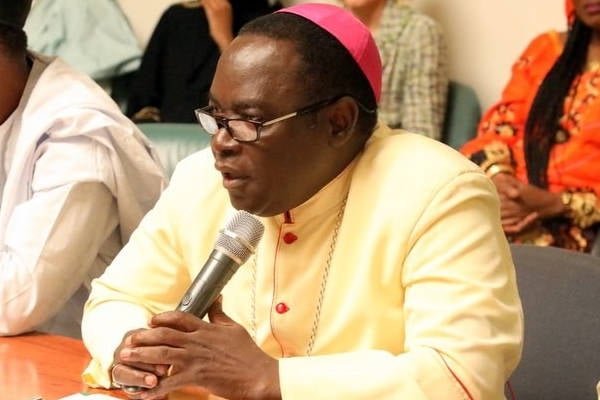
The Catholic Bishop of Sokoto Diocese, Most Rev. Matthew Kukah, has come under scrutiny for what has been described as a shift in his stance regarding the alleged persecution of Christians in Nigeria.
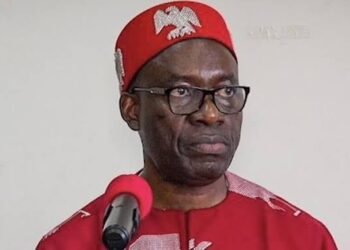
An activist, Dr Thompson Udenwa, in a statement issued in Abuja yesterday, criticised Bishop Kukah’s recent comments, noting that they appeared to contradict his earlier calls for stronger international intervention against Nigeria over issues of religious intolerance and attacks on Christian communities.
Udenwa recalled that some years ago, Bishop Kukah was among those who urged the United States Government to classify Nigeria as a Country of Particular Concern, CPC, following reports of church burnings, targeted killings, and assaults on Christian populations in the North and Middle Belt regions.
However, he expressed concern that the cleric’s latest remarks indicated what he described as an “inconsistency that should not be seen in political and religious leaders.”
According to Udenwa, “It is confusing that the same bishop who, in 2021, addressed the American Congress and lamented the Buhari administration’s alleged indifference to Christian persecution is now advocating against the very measure he once described as moral justice. Such a reversal weakens the credibility of religious advocacy and gives the impression that Bishop Kukah’s views are influenced by political sentiments than by principle.”
Udenwa’s comments followed Bishop Kukah’s recent statements at the presentation of the Aid to the Church in Need, ACN, 2025 World Report on Religious Freedom, held on October 21, 2025, at the Augustinianum Hall, Vatican City.
At the event, Bishop Kukah acknowledged Nigeria’s challenges in security and governance but urged the international community not to impose sanctions or diplomatically isolate the country.
While appreciating the cleric’s call for dialogue, Udenwa argued that such a position might encourage authorities to continue avoiding accountability for ongoing attacks on faith-based communities.
He emphasised that religious leaders must be “consistent and selfless in their advocacy,” insisting that “truth should be upheld regardless of who is in power.”