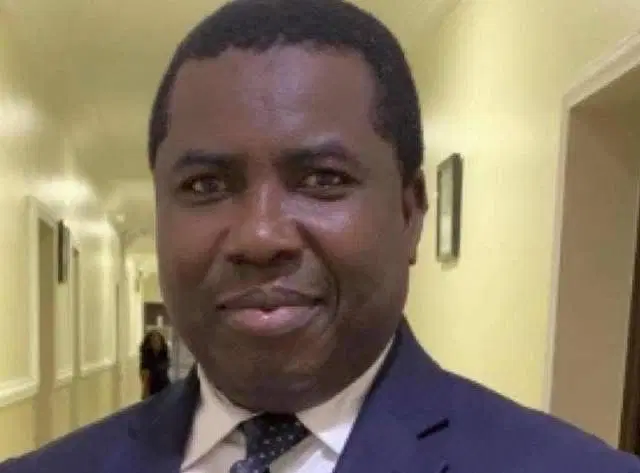
The new National Chairman of the Independent National Electoral Commission, INEC, Professor Joash Amupitan, SAN, began his tenure with a pledge that under his leadership, elections will be conducted so transparently that even losers will willingly congratulate winners.
Amupitan, however, emphasised that achieving this would require cooperation from key institutions such as the National Identity Management Commission, NIMC, the Nigerian Communications Commission, NCC, and other relevant agencies.
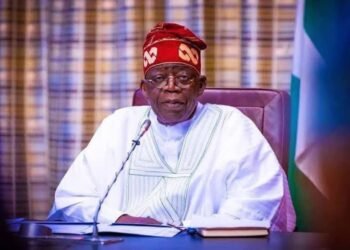
He made the assurance while addressing the Senate before and after his confirmation as INEC Chairman, following his nomination by President Bola Tinubu.
“Our ultimate goal is to make elections so credible that even the loser will be able to congratulate the winner in good faith just as a judge delivers judgment and both sides accept it as fair and just,” he stated while responding to a question from lawmakers.
Amupitan’s confirmation came after an extensive screening by the Senate, during which President Tinubu’s nominee was questioned for three hours.
Following the screening in the Committee of the Whole, the Senate returned to plenary, where the Senate President, Senator Godswill Akpabio, sought the opinion of members on the confirmation, and the “ayes” response was unanimous.
Akpabio announced that Amupitan’s appointment had been approved without opposition and urged him to ensure that “every vote counts” in future elections.
With his confirmation, Amupitan officially replaced Professor Mahmood Yakubu, who had served as INEC Chairman for ten years before stepping down on October 7.
Amupitan entered the Senate chamber at 12:50 p.m. after the Senate Leader, Senator Opeyemi Bamidele (APC, Ekiti Central), moved a motion to suspend Order 12 to admit guests into the chamber, seconded by the Minority Leader, Senator Abba Moro (PDP, Benue South).
Before Amupitan began his introduction and the question-and-answer session, Senate President Akpabio informed the chamber that the nominee had been cleared by the Department of State Services, DSS, the National Security Adviser, NSA, and the Inspector-General of Police, IGP, following security vetting and fingerprint verification.
Responding to a series of questions from senators, the Kogi-born Professor of Law stated: “I did not lead the legal team of the President at the Presidential Election Petition Tribunal. I did not appear at the Tribunal either at the Court of Appeal or at the Supreme Court.”
He further clarified that he was never part of the legal teams representing either the Peoples Democratic Party, PDP, or the Labour Party, LP.
“I was not a member of any team,” said Amupitan, who previously served as the Deputy Vice-Chancellor of the University of Jos (UniJos), Plateau State.
Amupitan pledged to prioritise credible elections, saying: “Mr. President, distinguished Senators, the concern raised is indeed a major one and it reflects the worry of many Nigerians. One of the first things we must do at the commission is to establish a credible internal mechanism to monitor the conduct and behaviour of officials.”
He also promised to conduct a thorough audit of the INEC Results Viewing (IReV) portal to fix the technical issues that affected public trust during the 2023 general elections. He explained that the purpose of the Bimodal Voter Accreditation System, BVAS, and IReV, was to ensure the integrity of elections, a goal shared globally by electoral technologies.
“I believe what happened in 2023 was subsumed as a glitch. Before the election, my understanding, based on a review of Supreme Court decisions, was that there was no clarity as to the purpose of IReV,” he said.
The IReV portal was introduced to promote transparency in the electoral process. However, during the 2023 presidential election, polling unit results were not uploaded in real-time as promised by INEC, causing widespread suspicion among Nigerians.
The INEC Chairman noted that the Supreme Court later ruled that IReV was not an electronic collation system, a clarification that INEC failed to communicate effectively before the elections.
He explained: “The IReV was supposed to be a safeguard for comparison because the laws made by this distinguished Senate did not do away with manual collation. However, IReV was supposed to provide some guarantee for checks and balances.
“On the issue of court decisions and technological systems, there has been confusion over certain innovations introduced by INEC, such as the electronic collation system. The Supreme Court has clarified some of these matters. When we assume office, we will assess the infrastructure on ground, review the technology, and adopt the best approach that enhances transparency and credibility in elections.
“I have to audit the system, if I’m given the opportunity, to see what is actually wrong and whether we have what it takes as it is now. Because it is not just the INEC responsibility, but also the other agencies like NCC, NIMC and the service providers that will have to work together to ensure that we give Nigerians the technology that everybody will be happy about.
“There will definitely be an audit of the system we are meeting and especially of the logistics of the election itself and ensure that the proper strategy is put in place. We all know the problem. So, we’ll find a proper strategy to be able to confront those problems headlong.”
Amupitan also stressed the importance of creating an Electoral Offences Commission to investigate and prosecute individuals responsible for electoral crimes.
He said: “I am taking this position on trust, and those who will work with me must also recognise that they are holding the trust of the Nigerian people. To maintain integrity, I intend to set up an Ethics and Compliance Committee within INEC to audit reported cases of misconduct.
“There have been numerous reports of electoral malpractice in the past, some of which were never properly addressed. In some instances, such as in Bayelsa and Adamawa states, a few offenders were prosecuted and even convicted. We intend to follow through on such cases to ensure accountability.”
Amupitan revealed plans to introduce a whistleblower policy within the commission to enable individuals to report electoral malpractices without fear of retaliation.
“We plan to develop a system that can detect, investigate, and prosecute misconduct, supported by forensic methods when necessary and strengthen INEC’s internal disciplinary process to ensure that all those involved in wrongdoing are brought to justice,” he said.
Addressing logistics and security concerns surrounding electoral materials, Amupitan stated: “I recognise that these are major challenges due to the size and diversity of our country. We will work closely with the Joint Committee on Election Security to enhance the protection of materials, personnel, and voters, especially in high-risk areas.
“We will also invest more in logistics and technology to ensure that every part of Nigeria is adequately reached. If necessary, we can deploy innovations such as drones and other secure means to guarantee that election materials reach their destinations. No voter will be left behind. That will be our guiding principle.
“Regarding timelines and inconsistencies in the Electoral Act, I acknowledge that some provisions contradict each other. We will work to harmonise these timelines to remove ambiguity. A clear and consistent electoral timetable will help to build public confidence and reduce post-election disputes.
“On financial prudence, I assure this chamber that the laws already enacted by the National Assembly, particularly the Public Procurement Act and the Finance Act will be strictly adhered to.
“INEC funds will be used only for the purposes for which they are appropriated, and we will seek ways to cut costs where possible without compromising efficiency.
“In summary, our approach will be guided by integrity, accountability, security, efficiency, and education to ensure that elections in Nigeria truly reflect the will of the people.”
Meanwhile, the Senate’s plan to begin consideration of the 2022 Electoral Act Amendment Bill suffered a setback yesterday as the bill was stood down.
The Senate and House Committees had earlier held a public hearing on Monday on the proposed 2025 Electoral Act Amendment Bill, which among other provisions, proposed that presidential and governorship elections in 2027 be conducted in November 2026, rather than February or March of the election year.
However, deliberation on the bill stalled in the Senate after Senator Simon Lalong (Plateau South), Chairman of the Senate Committee on Electoral Matters, presented the lead debate.
Lalong explained that the bill, first read on October 8, 2025, was not a mere amendment but a comprehensive reform—repeal and re-enactment—aimed at providing a more credible, transparent, and inclusive electoral framework for Nigeria.
He said: “The 2023 general elections tested our democracy in profound ways. While the Electoral Act, 2022 delivered some landmark innovations, it also exposed deep flaws of our country’s electoral system with critical gaps -delays in the release of election funds, disputes over the voter register, conflicting interpretations of result transmission, widespread litigation from party primaries, and weak enforcement of electoral offences.
“Nigerians expect us to respond not with patchwork corrections, but with a holistic, future-facing law that restores faith in our elections.”
Section 4 (7) of the proposed amendment provides that “Elections into the office of the President and Governor of a State shall be held not later than 185 days before the expiration of the term of office of the last holder of the office.”
This means that for the 2027 election cycle, the polls must be held in November 2026, as 185 days before May 29, 2027, falls within that month.
However, disagreement arose during the general debate when Senator Titus Zam (Benue North East) supported the bill’s progression to a second reading, a stance earlier echoed by Senator Binos Yeroe.
Senate President Godswill Akpabio interrupted, asking Senator Zam to explain the core amendments he sought to pass for a second reading.
After Zam concluded, Akpabio invited Senator Lalong, as Committee Chairman, to clarify the key details of the proposed changes.
Akpabio stated: “What is particularly important to me is what happened during the 2019 elections. I was unfairly treated, so we went to court. But what followed were multiple divisions, one after another.
“The legislation was clear, yet those who were supposed to uphold it acted otherwise. The returning officer, instead of being treated fairly, was turned into a scapegoat.
“The court had ordered the prosecution of the electoral commission, but instead of prosecuting the responsible officials, they went after the returning officer, a professor from the University of Calabar, who had served in the academics for 34 years. He was wrongly sentenced to three years in prison.
“They claimed the professor tried to assist Senator Akpabio. But if he was truly trying to assist him, why were my votes the ones affected? How did security agencies end up hijacking the result sheets to his office, which is against the Electoral Act?
“If the returning officer was really helping Senator Akpabio, how come he couldn’t manipulate the collation centre or the headquarters that handled the final results? Clearly, something went wrong, and justice was misplaced.
“Another issue is the election timeline. Campaigns run for eight months, and then there’s an additional three-month period before the polls. When politicians are later appointed as ministers, it affects the structure of governance.
“For instance, there are deadlines, six weeks or two months for international engagements, such as securing visas or other formalities.
“So, when you add all that time to the campaign and pre-election processes, it means a significant part of the four-year term is lost. Those meant to serve the nation effectively barely have time to make a real impact.
“These are the lessons we must draw. If we want to fix our electoral system, we must hold the right people accountable and ensure that INEC and other institutions do their jobs without bias or political manipulation.
“In a nutshell, the nitty-gritty of amendments being sought for in the 2022 Electoral Act for the proposed 2025 Electoral Act must be stated clearly before considering the bill for second reading.”
As a result, the Senate, following a motion by its leader, Senator Bamidele, and seconded by the Minority Leader, Senator Moro, resolved to stand down further consideration of the bill.