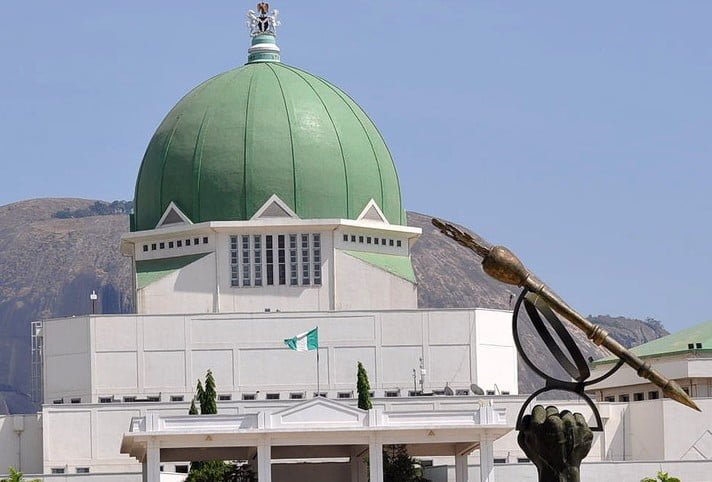
The decision by the National Assembly to hold the next presidential, governorship, and legislative elections in November next year has stirred discontent among some Nigerians, especially a coalition associated with the African Democratic Congress, ADC.
Federal lawmakers have proposed that the next general elections be conducted six months before the expiration of the current administration’s tenure, as opposed to the usual February or March timeline observed in previous years.
The proposal, outlined in a draft amendment to the 2022 Electoral Act, seeks to mandate that elections for the offices of President and Governors be held no later than 185 days before the conclusion of the incumbents’ tenure. Specifically, it proposes November 20, 2026, as the date for these elections.
This development has not been well received by some citizens who argue that the bill, if passed, could negatively affect governance.
According to critics, such an arrangement would lead current political leaders, including the President and State Governors, to neglect governance in favour of re-election campaigns, thereby depriving citizens of democratic benefits and worsening economic hardship.
They further believe that if elections are to be conducted in November next year, state allocations will likely be redirected towards election expenses rather than being used for infrastructural development and public welfare.
However, proponents of the proposal argue that it would allow sufficient time to resolve all electoral disputes before the swearing-in of elected officials.
They contend that it is inappropriate for an individual to assume the office of President or Governor while still defending election cases in court using state resources.
They expressed discomfort with a system where officeholders are sometimes removed two years after taking office due to court judgments, describing it as detrimental to the nation’s democratic process. According to them, such occurrences allow unqualified individuals to govern millions of citizens and make critical decisions for years before being removed.
Conversely, some supporters believe the proposed change would drastically reduce electoral malpractice.
They argue that conducting presidential and gubernatorial elections on the same day would prevent scenarios where Presidents assist Governors in rigging elections, or vice versa.
One of the major advocates of the proposal, Lagos-based lawyer Kayode Akiolu, explained how the idea would function if implemented.
He said: “This will actually reduce or even eliminate, to some extent, electoral fraud because while the president will be busy fighting for his survival and not remembering that any governor exists, the governors will also be busy fighting for their survival, not equally remembering that the president exists.
“For instance, if both governorship and presidential elections were held on the same day during the 2023 election, somebody like Governor Babajide Sanwo-Olu of Lagos State would not have won the election; he would have lost to the Labour Party, LP, candidate Rhodes Vivour.
“This is simple; the LP won the presidential election fair and square in Lagos, but because the then candidate of the All Progressives Congress, APC, Bola Tinubu was declared the winner of the presidential election, the party had to deploy federal forces to ensure that the APC candidate, Sanwo-Olu, won the election.
“If both elections were held the same day, Tinubu would not have had the time to help Sanwo-Olu in any way, and the governor would have been defeated just as the president was defeated in the state. This scenario applies in some other states.”
To reinforce his position, Agbaje cited examples of lesser-known candidates who won state and national assembly seats under unpopular parties because presidential and national assembly elections were conducted simultaneously, just as governorship and state assembly elections were held on the same day.
He said: “You discover that because the president was focusing on his own election, he didn’t care about any legislator’s victory just as the legislators didn’t care about the president’s victory but their own victory on election day.
“They may have campaigned for the president before the election but on that Election Day when they engage in all sorts of electoral malpractices, they don’t remember the president again; it is their own personal survival that they are interested in. That is why in 2023 and even previous elections, many candidates from the main opposition party and even unknown parties were able to win elections into both the state and national assemblies.
“If Presidential and national assembly elections were to be held on different days, you will see that any party that wins the presidency, will automatically take over 95 percent of the national assembly seats but because they are held on the same day, you always see candidates from different political parties winning, depending on how popular such candidates are to their constituents.”
Section 4(7) of the proposed amendment reads: “Elections into the office of the President and Governor of a state shall be held, not later than 185 days before the expiration of the term of office of the last holder of the office.” By this calculation, the 2027 general elections would therefore take place in November 2026.
The draft amendment emerged during a one-day public hearing organised by the Joint Committee on Electoral Matters of both chambers of the National Assembly. Lawmakers also recommended similar timelines for national and state legislative elections, proposing that they be conducted not later than 185 days before each house’s dissolution.
Chairman of the House Committee on Electoral Matters, Adebayo Balogun, explained that the proposed date adjustment was intended to address one of Nigeria’s persistent electoral issues — the delay in concluding post-election litigation.
He said: “We are proposing this adjustment to allow enough time for all election cases to be concluded before the swearing-in of elected officials.
“To achieve this, we are also proposing to reduce the duration of tribunal and appellate court judgments, so that all election disputes will be resolved within the 185-day window before inauguration.”
Balogun elaborated that under the proposed amendment, the time allocated for election tribunals to deliver verdicts would be cut from 180 days to 90 days, while appeals would be concluded within 60 days at the Appellate Court, leaving sufficient time for the Supreme Court to deliver final rulings.
To implement these changes, the Joint Committee also suggested amending sections 76, 116, 132, and 178 of the 1999 Constitution, thereby transferring the authority to determine election timelines from the Constitution to the Electoral Act.
According to the draft, “Section 28, now section 27 (5–7), was introduced due to the amendments to sections 76, 116, 132 and 178 of the Constitution, which seek to remove the determination of election timelines from the Constitution to the Electoral Act.”
In addition to changing election dates, lawmakers proposed the introduction of early voting for certain groups of Nigerians who typically perform essential duties during elections.
Section (2) of the draft amendment states: “There shall be a date set aside for early voting not later than 14 days to the day of the election.”
Eligible early voters include security officers, INEC personnel, accredited domestic observers, journalists, and ad hoc staff of the electoral body.
However, the proposal has faced resistance from several Nigerians and the ADC, which argue that it would undermine governance in the country.
In a statement, the ADC’s interim national publicity secretary, Bolaji Abdullahi, warned that conducting general elections in November would trap the nation in a cycle of continuous political campaigning, thereby disrupting governance and development.
The party urged the National Assembly to drop the plan and instead focus on genuine electoral and judicial reforms that would ensure credible elections and timely resolution of disputes without destabilising governance.
The ADC further stated that although the bill aims to provide more time for election petitions to be resolved before a new administration assumes office, it would ultimately cause more harm than good.
It stated: “By cutting the current political calendar by six months, the proposal threatens to push Nigeria into a state of permanent electioneering, where politics dominates governance and development is perpetually on hold.
“In practice, elections happening in November 2026 mean campaigns will begin as early as 2025. That leaves barely two years of real governance before the political noise takes over.
“The President, ministers, governors and other public officials vying for office or campaigning for others will shift their focus from performance to positioning. Policies will stall, projects will be abandoned and the entire system will tilt towards 2026 instead of 2027.
“Even without the amendments, we can see with the current APC government what happens to a country where an administration is obsessed with power rather than the welfare of the people. Even under the current timetable, the incumbent structures at the state and federal levels are already campaigning. In this regard, moving the elections backward will only accelerate this unhealthy trend and reduce our democracy to mere electioneering.”
The party argued that Nigerians are not just voters but citizens deserving of good governance as the true dividend of democracy. “Nigeria cannot afford a system that allows the government to campaign for two years and govern for two,” it cautioned.
Supporting the ADC’s stance, public affairs analyst Prince Johnson Meekor argued that if the goal of the proposal is genuinely to ensure that election petitions are settled before swearing-in, then the solution lies in strengthening institutions, reforming electoral laws, and enhancing the efficiency of the judiciary and INEC.
He explained: “Other democracies have shown that it is possible to maintain fixed electoral timelines, while ensuring quick adjudication of disputes. In Kenya, for instance, the Supreme Court must resolve presidential election petitions within 14 days under the 2010 Constitution.
“Indonesia’s Constitutional Court decides similar disputes within 14 working days after hearing, while Ghana’s Supreme Court is required to conclude presidential petitions within 42 days. Even in South Africa and other democracies, electoral cases are handled through expedited judicial processes.
“As these examples have shown, the amendment that we need is the one which ensures timely electoral justice through institutional efficiency, not by altering the election calendar to accommodate inefficiency.
“Changing the date of elections without fixing the underlying weaknesses in our electoral matters adjudication and other fundamental electoral weaknesses will not solve the problem. Countries that manage early campaigns effectively do so with firm institutional safeguards,” he concluded.