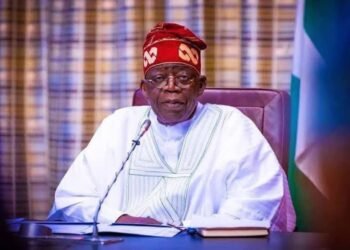
Petroleum marketers have cautioned that the pump price of Premium Motor Spirit, commonly known as petrol, could exceed N1,000 per litre following President Bola Tinubu’s endorsement of a 15 per cent ad valorem import tariff on fuel imports.
The new regulation, which will take effect after a 30-day transition period ending on 21 November 2025, forms part of the government’s plan to safeguard local refineries and curb the influx of cheaper imported products that threaten domestic refining investments.
However, marketers have warned that the policy might backfire and drive fuel prices further beyond the reach of ordinary Nigerians.
Speaking in a telephone interview on Thursday, several depot operators with knowledge of the issue, who requested anonymity, explained that the decision could lead to another price hike, as petrol currently sells for about N920 per litre in many areas across the country.
“As it is, the price of fuel may go above N1,000 per litre. I don’t know why the government will be adding more to people’s suffering,” one depot operator said.
Another depot operator added, “Unfortunately, some of the importers are working in alignment with Dangote, which is why the last price increase was general; all players raised their prices at once. Let’s just wait and see what happens next.”
A third operator observed that without a clear framework to balance market forces and promote fair competition, the new import tariff might trigger another round of price hikes and worsen hardship for consumers.
The National Vice-President of the Independent Petroleum Marketers Association of Nigeria (IPMAN), Hammed Fashola, also acknowledged that the tariff would have implications, noting that it could lead to a rise in prices.
Fashola stated that the policy had both advantages and disadvantages, explaining that it might discourage importation while boosting local refining.
The IPMAN leader remarked that some marketers might interpret the move as an attempt to monopolise the sector in favour of Dangote and a few other refineries.
“The 15 per cent tariff on imported fuel has its own implications. Maybe the price will go up, and equally, it will discourage importers from bringing in fuel if it becomes too costly.
“But it has both negative and positive effects on the sector. I see that the government is trying to protect local refiners, but it will have its own implications because people will see it as a way of monopolising the industry for certain people. At the same time, the government aims to protect the local refiners.”
However, Fashola emphasised that if the local refiners failed to meet the nation’s fuel demand, a scarcity could occur.
“If the local refiners fail, it will have its own implications. It may lead to scarcity, and people will not have an alternative. So, it has both positive and negative effects. That’s the way I see it,” he added.
When asked whether the policy aligns with the Petroleum Industry Act, Fashola responded, “I don’t think the government will do anything outside the law. They would not like to do anything against the PIA. Ordinarily, everybody would like to see that our local refineries are surviving and they are doing well, which is good for our economy. I don’t think it has anything to do with the PIA.”
In his message to local refiners, particularly the Nigerian National Petroleum Company Limited (NNPC), Fashola urged them to meet public expectations and expedite the rehabilitation of the Port Harcourt, Warri, and Kaduna refineries.
“My advice or my prayer is to the new management of NNPC: the way they are going, I think they are going in the right direction, and they have to do it fast by bringing in investors to revive our refineries. If all NNPC refineries can come on board, it will solve a lot of problems. I hear people trying to say that maybe they’re going to practise monopoly, but that will not be there. This applies to other private refineries like BUA; when they are able to come up, I think that the fear of monopoly will not be there anymore. There will be competition among the refineries, and that will be good for us,” Fashola stated.
Meanwhile, the National President of the Petroleum Products Retail Outlet Owners Association of Nigeria (PETROAN), Billy Gillis-Harry, described the 15 per cent tariff as a win-win measure, noting that the policy would undergo testing, even though it was not entirely new.
“Our expectation is that at some point, it might be reviewed. We are looking for product availability and affordability. We must always keep an eagle eye on these two things. That’s what PETROAN will advise at this time. I want Nigerians to know that if we are looking for cheap fuel and we are driving everybody out of the business, the product will not be available, and then prices will skyrocket.
“As it is today, everybody is working with Dangote, and we know that Dangote cannot satisfy the country. So, there has to be a mix of product availability,” he added.
President Tinubu had earlier approved the introduction of a 15 per cent ad valorem import duty on petrol and diesel imports into Nigeria.
The initiative aims to safeguard local refineries and stabilise the downstream petroleum market.
In a letter dated 21 October 2025 and made public on 30 October 2025, addressed to the Attorney-General of the Federation and Minister of Justice, the Federal Inland Revenue Service (FIRS), and the Nigerian Midstream and Downstream Petroleum Regulatory Authority (NMDPRA), Tinubu authorised the immediate enforcement of the tariff as part of a “market-responsive import tariff framework.”
The letter, signed by his Private Secretary, Damilotun Aderemi, and obtained on Thursday, confirmed the President’s approval following a proposal by the Executive Chairman of the FIRS, Zacch Adedeji.
The proposal sought to impose a 15 per cent duty on the cost, insurance, and freight (CIF) value of imported petrol and diesel to align import prices with local market realities.
This tariff is separate from the 5 per cent surcharge that will be applied to both locally produced and imported fuel under the new tax act, beginning in January 2026.
Adedeji, in his memo to the President, explained that the policy formed part of ongoing reforms to promote local refining, ensure price stability, and strengthen the naira-based oil economy in line with the government’s Renewed Hope Agenda for energy security and fiscal sustainability.
According to projections in the letter, the 15 per cent import duty could raise the landing cost of petrol by about N99.72 per litre, based on an average daily consumption of 19.26 million litres as of September 2025.
This increase translates to an additional N1.92 billion in daily import costs and revenue for the government.
The letter read, “At current CIF levels, this represents an increment of approximately N99.72 per litre, which nudges imported landed costs towards local cost recovery without choking supply or inflating consumer prices beyond sustainable thresholds. Even with this adjustment, estimated Lagos pump prices would remain in the range of N964.72 per litre ($0.62), still significantly below regional averages such as Senegal ($1.76 per litre), Côte d’Ivoire ($1.52 per litre), and Ghana ($1.37 per litre).”
It further stated that payments would be made into a dedicated Federal Government revenue account managed by the Nigeria Revenue Service, under the oversight of the Nigerian Midstream and Downstream Petroleum Regulatory Authority for verification and clearance.
“The core objective of this initiative is to operationalise crude transactions in local currency, strengthen local refining capacity, and ensure a stable, affordable supply of petroleum products across Nigeria,” Adedeji stated.
The FIRS chairman also cautioned that the current gap between locally refined products and import parity pricing had caused market instability.
“While domestic refining of petrol has begun to increase and diesel sufficiency has been achieved, price instability persists, partly due to the misalignment between local refiners and marketers,” he wrote.
He noted that import parity pricing—the benchmark for determining pump prices—often falls below cost recovery levels for local producers, especially during currency and freight fluctuations, thereby exerting pressure on emerging domestic refineries.
Adedeji added that the government’s role was now “twofold: to protect consumers and domestic producers from unfair pricing practices and collusion, while ensuring a level playing field for refiners to recover costs and attract investments.”
He argued that the new tariff system would discourage duty-free fuel imports that undercut domestic producers and encourage a fair and competitive downstream market.
The policy comes as Nigeria intensifies efforts to cut dependence on imported petroleum products and boost domestic refining capacity.
The 650,000 barrels-per-day Dangote Refinery in Lagos has begun producing diesel and aviation fuel, while modular refineries in Edo, Rivers, and Imo States have started small-scale petrol refining.
Despite these improvements, however, petrol imports still accounted for up to 69 per cent of national consumption between August 2024 and 10 October 2025.
Adedeji emphasised that the policy was not aimed at raising revenue but at correcting market distortions to align import prices with local production realities and prevent duty-free imports from undermining newly revived refineries.
“While domestic refining of PMS has begun to increase and diesel self-sufficiency has been achieved, price instability persists,” the memo stated.
“Import parity remains the benchmark for pricing but often sits below the cost-recovery point of local producers, particularly during currency and freight fluctuations.”
The document warned that if the situation was not addressed, the pricing gap could weaken local refining viability at a time when investors were returning to the sector after years of inactivity.
The framework is designed to promote new investments in refining, storage, and logistics while ensuring fair competition between local producers and marketers.
The tariff is backed by Sections 21 and 22 of the Petroleum Industry Act, which empower the NMDPRA to impose public service obligations on licensees to promote energy security and national development.
Under Section 3(4) of the PIA, the President also holds the authority to issue policy directives to the regulator to implement such measures.
As stated in the directive, the NMDPRA is to issue relevant regulations and gazette publications, prioritising locally refined products when granting import licences.
The regulator will also collaborate with the Implementation Committee on Crude and Refined Products Sales in Naira to monitor progress and determine when tariff revisions or termination clauses may be necessary.
Tinubu also instructed the NMDPRA to periodically review the tariff with a view to reducing or removing it as local refining capacity expands.
“In view of the foregoing, Your Excellency is respectfully invited to consider and, if deemed appropriate: approve the introduction of a 15 per cent tariff import duty on Premium Motor Spirit and diesel, to be assessed on the cost, insurance, and freight value at discharge, with all payments made into a designated Federal Government of Nigeria revenue account and verified by the Nigerian Midstream and Downstream Petroleum Regulatory Authority before discharge clearance.
“Direct the NMDPRA and the Nigeria Customs Service to implement a 15 per cent import duty on PMS and diesel, with effect after a 30-day transition period from the date of official notification. Direct the regulator to issue appropriate regulations in this regard and take local production into account first before the issuance of import licences.
“Direct a periodic review of the tariff rate and its continued necessity, including provision for scaling or sunset measures, as domestic Premium Motor Spirit refining capacity expands, under the oversight of the Implementation Committee on Crude and Refined Products Sales in Naira. Respectfully submitted for Your Excellency’s consideration and further directives.”
All these recommendations were approved by President Tinubu for immediate implementation on 21 October 2025.
Meanwhile, the NMDPRA spokesperson, George Ene-Ita, has assured that the regulator will fully implement President Bola Tinubu’s 15 per cent fuel import tariff once it receives an official directive from the government.
“We are the sector regulator, and once the policy comes into force, we will definitely play our regulatory role and midwife the process on behalf of the government,” the official said on Thursday.
“As of now, I’m not aware of any official communication, but if it is true that the policy has been signed by the President, it will eventually get to us, and there will be no issue implementing it.”
The spokesperson further explained that the downstream sector remains fully deregulated, meaning that market forces and competition among operators will determine retail prices once the tariff takes effect.
“Since it is a presidential directive, the template is already there to follow through,” the spokesperson added. “Prices may rise, stay the same, or even drop depending on competition and market realities. Personally, I don’t envisage any sharp increase because the government would have factored in stabilisation mechanisms to ensure that prices at the last mile don’t spiral out of control.”
Energy analysts, however, urged caution, warning that while the policy could encourage patronage of local refineries and boost government revenue, it might also threaten energy security and affect retail prices.
Oil and gas analyst Olatide Jeremiah explained that the tariff would “inevitably add a mark-up of about N100 per litre to the landing cost of petrol and diesel,” potentially creating unfair competition among suppliers.
“This move will drive demand towards local refineries and increase government income,” the expert noted. “But it could also trigger price hikes and short-term energy insecurity, as even top energy-producing nations still import about 10 to 15 per cent of their fuel needs. Completely cutting off imports through high tariffs could expose the country to supply risks. The introduction of a 15 per cent tariff will add a mark-up of about N100 per litre to the landing cost of petrol and diesel, and it will give unfair price competition to the supply players.”
Meanwhile, a prominent member of the All Progressives Congress in Delta State, Chief Ayiri Emami, has criticised the President’s approval of the 15 per cent ad valorem import duty on petrol and diesel, warning that the move will worsen the plight of ordinary Nigerians.
Emami, who also serves as Chairman and Chief Executive Officer of A & E Group, an oil, construction, and haulage company, made this statement at a press conference in Abuja.
Speaking with journalists, he lamented that the decision would “hurt the masses, not marketers.”
The APC chieftain urged the President to suspend the policy until measures were in place to provide relief to citizens.
“Anybody advising Mr President to impose a 15 per cent tax on petroleum right now is not doing him any good. This kind of policy will not hurt marketers; it will hurt ordinary Nigerians. Whatever tax you put on petroleum goes straight back to the people on the streets. Nigerians are already hungry and struggling,” he said.
Emami added that the cost of fuel had already crippled livelihoods, particularly in rural and riverine areas reliant on fishing and transportation.
“When you buy fuel, it determines whether you can even go out to fish. It’s not that the fish are gone; it’s that we can’t afford to reach them anymore,” he said. “For me, that 15 per cent should be kept aside until the government provides more relief to Nigerians. Even after removing the fuel subsidy, we haven’t seen much positive reflection. Things are still hard. So why add another burden?”
The businessman also expressed concern that certain individuals may be misleading the President.
“Some people don’t care about Mr President or what he’s going through; they just want to create more problems. Those are my honest opinions on the matter,” he added.
Some Nigerians have linked the new policy to recent remarks by Africa’s richest man, Aliko Dangote, who on Sunday suggested that the Federal Government’s latest direction in the downstream oil sector would strengthen the naira against the dollar.
On social media, user @az4top speculated that Dangote might have been referring to the newly approved 15 per cent fuel import tariff, which experts say could ease pressure on foreign exchange by encouraging local refining and reducing import dependence.
On X (formerly Twitter), user @Rufyb condemned the decision, calling it “stupid” and questioning the rationale behind restricting consumers’ choices in a deregulated market.
“You got FX allocations at special rates to build your refinery and operate in a free trade zone, fine. Then produce and let others do their business. The market should decide what consumers want. Import tariff, because why?” he wrote.
Another user, @OpeBee, criticised the policy as short-sighted, pointing out that it would take effect alongside a 5 per cent fuel surcharge scheduled for January 2026.
“You raise the tariff on PMS by 15 per cent. There is also a 5 per cent surcharge next year, and people are defending this, saying it’s to discourage importation. The cascade of events to follow will be worse than importation,” he warned.
Similarly, @Mista_Jameel accused local refiners of hypocrisy, claiming that they “bypass Nigerian crude for cheaper U.S. crude” while restricting opportunities for domestic importers.
“NMDPRA’s own data shows where local supply stands, but it seems we’re in an era of alternative facts,” he added.
Others, however, supported the government’s decision. Tech entrepreneur @markessien described the tariff as a “good step” towards protecting Nigeria’s growing refining industry.
“Nigeria has a working refinery and another being built. Imported fuel should have a tariff,” he wrote.
Another user, @haneefdin, expressed gratitude to President Tinubu for “supporting domestic production.”
However, critics like @Lawatem contended that the move “gives Dangote Refinery control of the whole market, artificially boosts profits, and forces Nigerians to pay for inefficiency.”
He added, “What’s the point of subsidy removal and supposed deregulation if we end up here?”