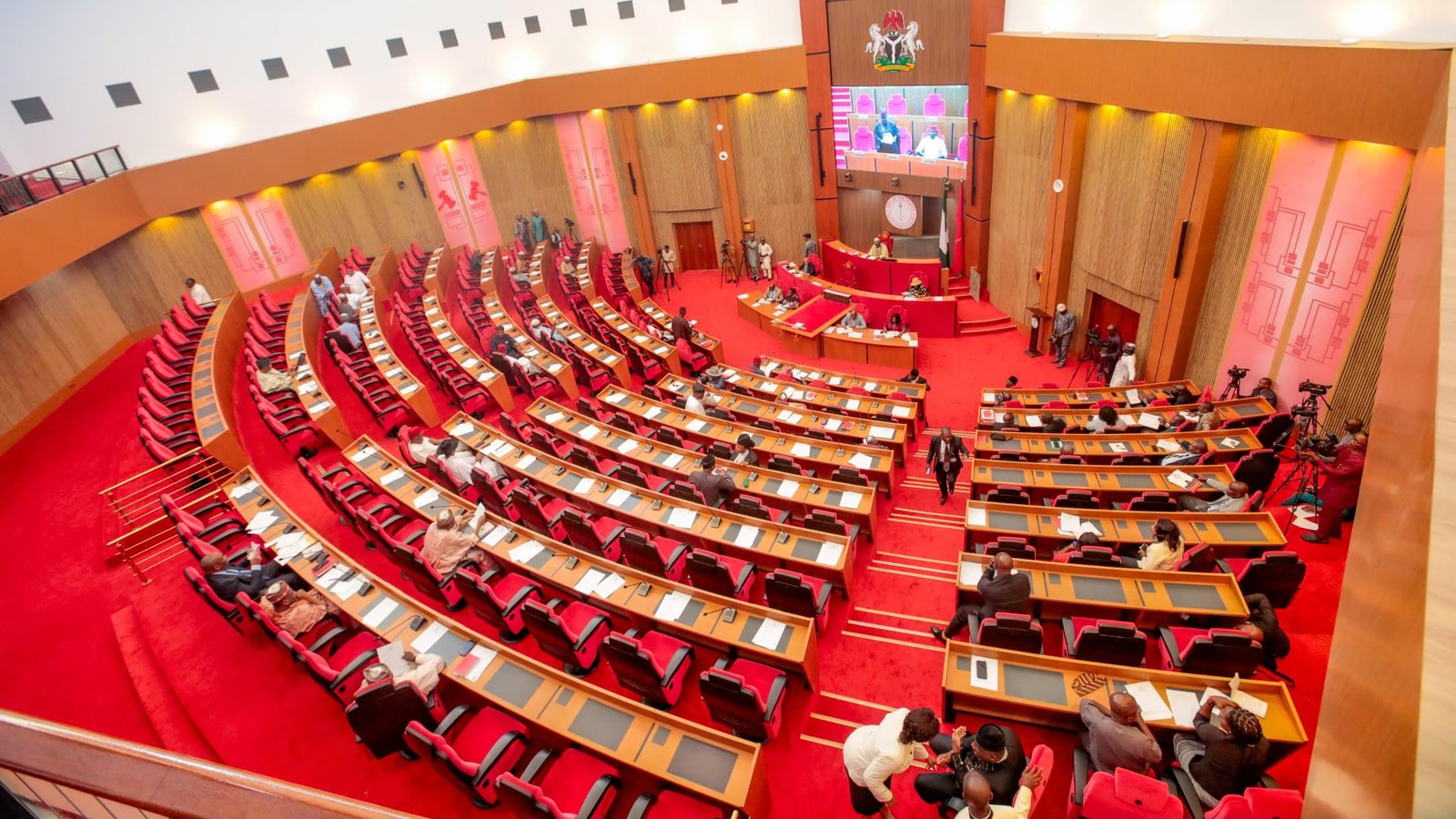
On Tuesday, the Nigerian Senate directed its Committee on Basic and Secondary Education to summon Education Minister Tunji Alausa and leaders of related agencies over the unexpected rollout of a new curriculum and a registration guideline recently introduced by the West African Examinations Council (WAEC).
The decision followed a motion put forward by Senator Sunday Karimi (APC Kogi West), who warned that the abrupt change could result in widespread failure for students slated to take the 2026 Senior Secondary Certificate Examination (SSCE).
Karimi explained that the Federal Ministry of Education and WAEC had imposed an “ill-prepared” policy requiring all SS3 students nationwide to follow a curriculum originally intended for students currently in SS1, who are set to sit exams in 2027 and 2028.
He further noted that the new directive had eliminated several subjects—including Computer Studies and Civic Education—from the WAEC syllabus for the May/June 2026 exam. This change came despite years of student preparation, reducing the number of examinable subjects for most students to six, below the required minimum of eight.
Citing Sections 14(2)(b) and 18 of the 1999 Constitution, which prioritise citizens’ welfare and guarantee equal educational access, the Senate was urged to intervene promptly.
Senator Adams Oshiomhole (APC Edo North) criticised the hasty implementation, calling it a “culture of anarchism.” He highlighted the lack of adequate teachers, labs, equipment, and proper communication with parents and schools.
“You cannot announce an exam in subjects students have not been taught. Good intentions aren’t enough; thorough preparation is essential,” Oshiomhole stated.
He supported the call for the Senate to summon the Minister of Education and other agencies to prove readiness before such a significant change.
Senator Idiat Adebule (APC Lagos Central) also emphasised that major educational reforms should be approved by the National Council on Education, involving all state education commissioners, and recommended a broader inquiry into the curriculum changes.
Senate President Godswill Akpabio announced that the Minister, education agency heads, and the Senate committee would meet to address the issue. While the Senate had already agreed to exclude current SS3 students from the new curriculum, Akpabio stressed the need for full discussions with the ministry before issuing a final decision.
“These are critical matters. We cannot allow mass failures in the 2026 WAEC exams,” he said. “The committees should summon the Minister immediately and submit a report within two weeks.”