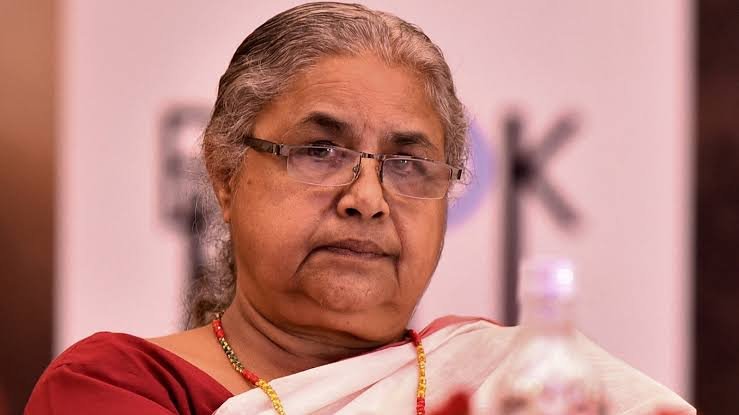
Nepal’s former chief justice, Sushila Karki, has been appointed to lead the country as its next prime minister after violent protests toppled the government, the president’s office announced Friday. Karki, 73 and Nepal’s first woman chief justice, is set to be sworn in later on Friday.
The Himalayan nation of 30 million was thrown into turmoil this week after security forces attempted to suppress rallies led by young anti-corruption protesters. At least 51 people were killed, marking the deadliest unrest since the end of Nepal’s civil war and the abolition of the monarchy in 2008.
KP Sharma Oli, 73, leader of the Communist Party, resigned as prime minister on Tuesday, and his current whereabouts remain unknown. “President Ram Chandra Paudel will appoint former chief justice Sushila Karki as the prime minister,” presidential press adviser Kiran Pokharel told AFP, adding that a swearing-in ceremony will take place at 9:00 pm (1515 GMT). Pokharel said a council of ministers will be formed following her appointment.
The military regained control of the streets on Wednesday, enforcing a curfew as army chief General Ashok Raj Sigdel and President Paudel held talks with representatives of “Gen Z,” the youth protest movement. “It is a moment of victory… finally the power vacuum has ended,” said Amrita Ban, a Gen Z protester. Demonstrators confirmed their support for Karki, with Nimesh Shrestha telling AFP, “We have an agreement. The parliament will be dissolved. Sushila Karki will be the prime minister.”
The protests were fueled by Nepal’s deep economic challenges, including youth unemployment of 20% and a per capita GDP of just $1,447, according to the World Bank. Violence escalated when police cracked down on demonstrations sparked by a social media ban, leaving at least 21 protesters dead. Parliament, government buildings, and a Hilton Hotel were among sites set on fire.
Authorities said more than 12,500 prisoners who escaped during the unrest remain at large, and the army has recovered over 100 looted firearms. Soldiers continued patrolling the largely calm streets of Kathmandu on Friday.
Residents described days of fear and confinement. Naveen Kumar Das, a painter-decorator, said he stayed locked inside with his family, while Laxmi Thapa said she ventured out cautiously as the situation improved. Protester James Karki expressed hope for the future: “We started this movement so we could make a better Nepal.”