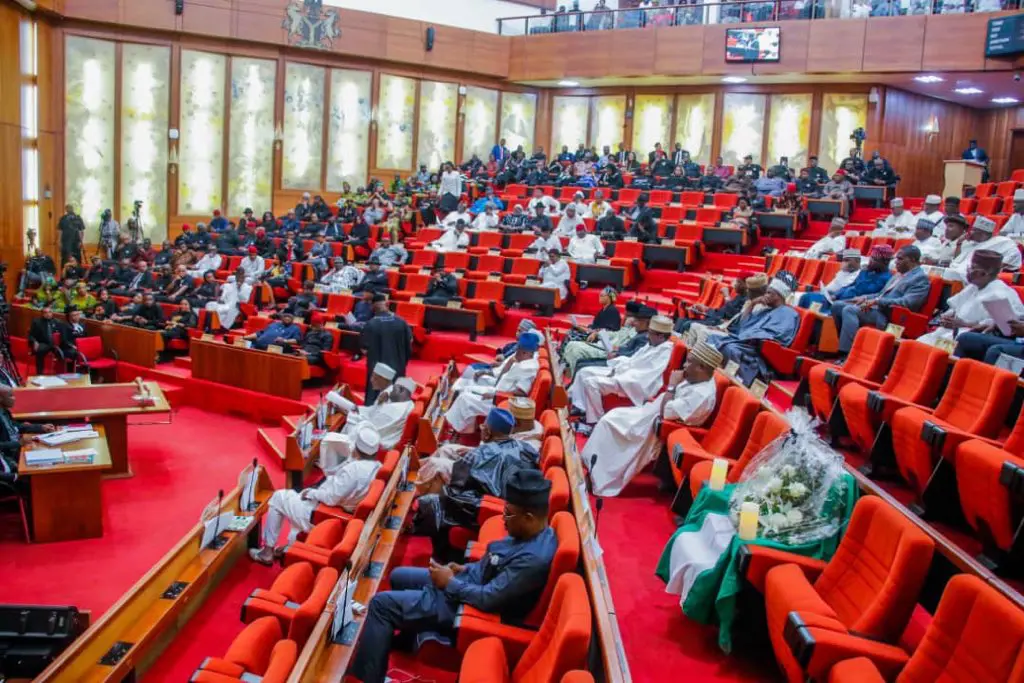
The Nigerian Senate has passed the Sexual Harassment of Students (Prevention and Prohibition) Bill, 2025, prescribing up to 14 years imprisonment and a minimum of five years without an option of a fine for anyone convicted of sexually harassing students in tertiary institutions.
The bill, read for the third time and passed on Wednesday, seeks to protect students from sexual misconduct in educational settings while establishing a clear legal framework for prosecution and punishment.
Senate Leader, Opeyemi Bamidele of Ekiti Central, who presented the bill for concurrence, explained that the legislation aims to uphold integrity in higher institutions, preserve the sanctity of the educator-student relationship, and ensure justice for victims.
According to the bill, offenders who commit any act listed in clauses 4(1) to 4(3) face imprisonment of up to 14 years but not less than five years, without an option of fine. Lesser offences under clauses 4(4) to 4(6) attract jail terms of between two and five years. The legislation also allows victims to pursue civil action for breach of fiduciary duty, in addition to criminal prosecution. It empowers institutions to handle internal disciplinary measures, except when a case is already in court.
Under the law, an educator commits sexual harassment if he or she has or demands sexual relations with a student, intimidates or solicits sexual favours, creates a hostile learning environment through sexual advances, touches or pinches students inappropriately, sends or displays sexually explicit materials, makes lewd comments, or aids others in committing acts of sexual harassment.
The bill clearly states that marriage is the only valid defence for such acts, while student consent is not a defence in any case. It further empowers students, relatives, guardians, or legal representatives to submit written complaints to the Nigerian Police Force or the Attorney-General, who will initiate prosecution. A copy of the petition must also be submitted to the school’s Independent Sexual Harassment Committee for record purposes.
During deliberation, some lawmakers, including Senator Adams Oshiomhole of Edo North, argued that the law should also extend to workplaces and other environments. He said there was no need to restrict sexual harassment issues to students and that the law should have universal application. However, Deputy Senate President Barau Jibrin of Kano North, who presided over the session, clarified that since the bill originated from the House of Representatives, it could only be amended and not debated extensively. He added that other existing laws already address harassment outside the education sector.
After a brief session, the Senate passed the bill for third reading, marking a significant step toward eradicating sexual misconduct in Nigerian educational institutions.