The Federal Government is set to enlist more than 94,000 additional personnel into Nigeria’s security agencies as part of efforts to address the growing insecurity across the country.
As part of the plan, the Police Service Commission and the Nigeria Police Force will recruit 50,000 police constables.
The recruitment portal will be open to eligible Nigerians from December 15, 2025, until January 25, 2026.
In a statement issued on Thursday by Torty Kalu, the Head of Protocol and Public Affairs, the Commission confirmed that the portal would open for applications from December 15, 2025, to January 25, 2026.
According to the statement, “The PSC, in collaboration with the NPF, is pleased to announce the commencement of recruitment of 50,000 Police Constables into the Nigeria Police Force, as directed by President Bola Tinubu. Following this Presidential directive aimed at strengthening community policing, enhancing internal security and expanding the manpower base of the Nigeria Police Force, the Commission has approved the opening of the recruitment portal for applications from eligible Nigerians.
“For the General Duty cadre, applicants are required to possess GCE Ordinary Level, SSCE/NECO or equivalent qualifications with at least five credits, including English Language and Mathematics, in no more than two sittings.
“Applicants for the Specialists cadre must possess a minimum of four credits, including English and Mathematics, also in no more than two sittings, and must have at least three years of experience and relevant trade test certifications.”
He added that eligible applicants must be Nigerian citizens by birth.
A senior Army official, who spoke unofficially as he was not authorised to brief the media, stated that the Army could recruit around 14,000 new soldiers in line with the President’s directive.
“You know the President recently gave an order; based on that, we might probably recruit 14,000,” the official said.
Although the Navy and Air Force did not disclose specific figures, sources indicated that both services would increase their intake.
In June, the Ministry of Interior announced a nationwide recruitment of 30,000 officers across the four paramilitary agencies.
However, officials within the ministry told our correspondent that the process was being fast-tracked so that the recruited personnel could enter service promptly.
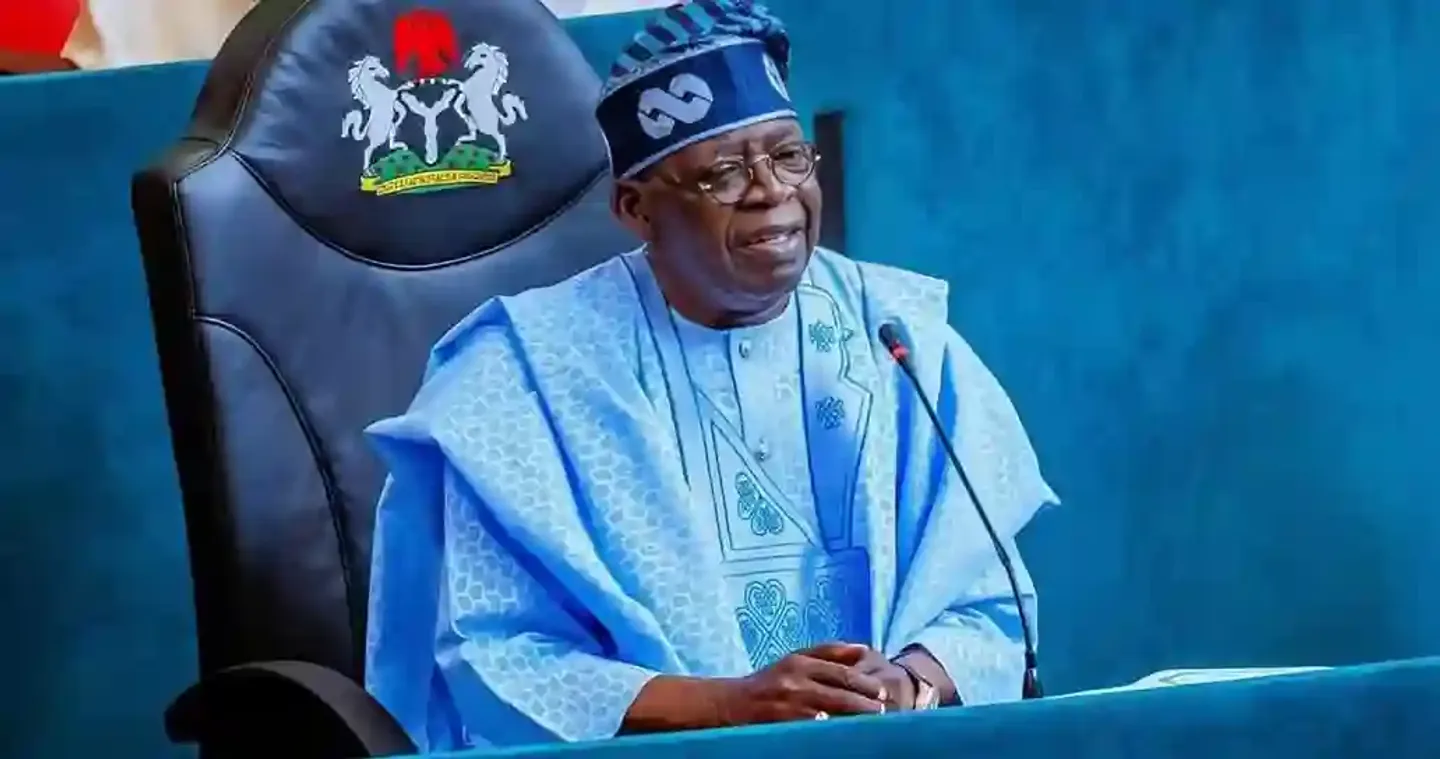
On November 26, 2025, President Bola Tinubu announced a nationwide security emergency and instructed the Police and Armed Forces to increase their manpower to tackle the escalating security situation.
The planned recruitments follow a spike in nationwide violence, with the expectation that additional manpower will strengthen ongoing operations.
The Governor of Plateau State, Caleb Mutfwang, welcomed the decision to embark on large-scale recruitment, saying the nation urgently needed more security officers on the ground.
He noted that the intervention had arrived at a time when security issues were becoming more serious across the country.
He made the remarks during a visit to the Minister of Defence, Gen. Christopher Musa (retd.), in Abuja to discuss solutions to the persistent insecurity in Plateau State.
Mutfwang expressed confidence in Musa’s appointment, calling it a strategic and timely decision in tackling Nigeria’s complex and evolving security issues.
He pledged full support for efforts to defeat insecurity at both the state and national levels.
This was contained in a statement issued by his Director of Press and Public Affairs, Gyang Bere, on Thursday.
The governor stated that the minister’s extensive experience and professionalism would enhance ongoing national security efforts.
Reaffirming his long-held position, he repeated his call for the creation of state police.
Mutfwang said, “The decision is timely, and I believe that overtaxed security personnel will be having a sigh of relief very soon. One very important thing is that states have serious areas that are really threatened and require attention. So, we just need to expand and give more impetus.
‘’For me, if there is a window to get more security personnel, then the Plateau State Government is quite ready to key in. If we have the right manpower, equipment and motivation as some of the basics, the security situation in the country will improve.”
He added that Nigeria needed to recruit enough personnel not only to meet the UN ratio of one police officer to 500 citizens, but also to ensure that every village with more than 100 residents had at least one police officer—even if this meant the Nigeria Police Force would require over one million personnel.
He said, “Where we are going is that even if we have 100 people in a village, let at least one policeman be posted there. But to achieve that, we need one million police personnel or more. But at least let us begin with what we have and see what we can do. Once we do that, we can move forward.”
Speaking on the concept of state police, he added that it required careful planning with clear legislative guidelines to prevent misuse, but maintained that with the right operational structure, it could work effectively.
Reacting to the recruitment initiative, Brig. Gen. Peter Aro (retd.) said the addition of more than 94,000 personnel was a positive acknowledgement of the country’s security crisis, but cautioned that numbers alone would not solve the problem.
Aro said, “The Federal Government’s plan to inject over 94,000 new personnel into the security architecture is a welcome signal. This shows that the country finally recognises the scale of our internal security crisis. But numbers alone do not guarantee security; what matters is who we recruit, how we train them, and the doctrine that guides their deployment.
“For the police, recruiting 50,000, on paper, sounds impressive. In reality, Nigeria is under-policed by almost 120,000 officers when compared to the UN benchmark. So 50,000 is not an excess: if anything, it is simply a first down-payment on what we truly need. But the key is thorough vetting. If we merely pour quantity into a structure already battling corruption, poor discipline and weak community relations, we will only multiply the old problems. What Nigeria needs is fewer bad officers and more good ones, not raw numbers.’’
He added that for the paramilitary agencies, the recruitment of 30,000 personnel could strengthen border security, immigration control, civil defence and correctional services, but only if the process remained professional and merit-based.
He warned that these agencies must not become “parking lots” for political rewards, stressing that their effectiveness depended on training, equipment and clearly defined roles.
Turning to the Army, Aro argued that the projected 14,000 recruits would not be enough for a nation the size of Nigeria, noting that the number barely covered natural attrition such as retirements, casualties and resignations.
He added that for Nigeria to rebuild its strength and deterrence capability, the Army should be growing by between 30,000 and 40,000 annually for the next five years.
He concluded that the 94,000-personnel expansion would only be meaningful if recruitment was transparent, training modernised, and the Armed Forces—particularly the Army—received adequate resources.
Brig. Gen. Bashir Adewinbi (retd.) also welcomed the increased recruitment, saying it was necessary due to Nigeria’s population and numerous ungoverned spaces, but stressed the need for rigorous screening to ensure that only capable and committed individuals were selected.
He said, “The increase in manpower is a welcome development given the size of the population and the number of ungoverned spaces. I think it is a decision taken to address the shortage of security personnel.
‘’But most importantly, they must ensure they employ the right people—those who are committed, not politically selected. They should look for individuals who are genuinely dedicated and whose aim is to serve the nation. The recruitment must be very thorough. If we get it right at this stage, everything else will follow.”
Commenting on the development, the Chairman of the Committee of Chairmen of the Nigerian Bar Association, Benin Zone, Adebanjo Ebhoade, warned that politicians must not be allowed to use the large recruitments to reward political allies.
He stressed that only qualified candidates should be selected.
Ebhoade said, “The recruitment process should be carried out by an independent committee drawn from retired men of the armed forces and other relevant agencies. There should not be political influence. Let the best candidates be recruited. We need to have the best hands recruited so that we can have a sufficient workforce to deal with the issues affecting this country.”
A member of the Oyo State Community Policing Advisory Committee, Segun Ebenezer, urged the Federal Government to ensure that the huge recruitment drive did not repeat past mistakes where some agencies were flooded with unvetted personnel.
He said, “It is a great initiative and will help the supply side of personnel deployment in combating insecurity. However, recruitment needs to be on merit, and the quality of personnel taken in should be thoroughly gauged.
“When recruitment is massive, the temptation for nepotism and political compensation is high. The process must be transparent and fair. After recruitment, what becomes important is training. It should not only be a normal onboarding programme, but a real and thorough training exercise that equips them mentally, physically and psychologically.”