Senator Natasha Akpoti-Uduaghan of Kogi Central has mounted a robust legal challenge against the Federal Government over criminal defamation charges, describing the case as politically motivated and an example of double standards.
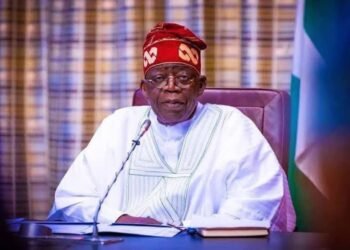
Filing preliminary objections before both the High Court of the Federal Capital Territory and the Federal High Court, her legal team sought the dismissal of six counts brought against her by the Attorney General of the Federation (AGF). Akpoti-Uduaghan argued that while the government acted swiftly on complaints by Senate President Godswill Akpabio, it ignored her earlier petitions against him.
The charges, filed under the Cybercrimes (Prohibition, Prevention, etc.) (Amendment) Act, 2024, relate to statements she allegedly made during a public event and a television interview. She was arraigned on June 20, pleaded not guilty, and was granted bail on self-recognition. The case, FHC/ABJ/CR/195/2025, is being prosecuted by the Director of Public Prosecution of the Federation, Mohammed Abubakar.
Her defence team, led by Senior Advocates of Nigeria—Prof. Roland Otaru, SAN; Dr. E. West-Idahosa, SAN; J.J. Usman, SAN; and M.J. Numa, SAN—challenged the jurisdiction of the courts and argued that the AGF lacks the legal standing to prosecute a private defamation matter. They described the charges as “unconstitutional, frivolous, and designed to intimidate opposition voices,” presenting evidence showing her remarks fall within public discourse and media commentary.
The lawyers emphasized that defamation is inherently a civil matter and that criminalizing it constitutes a misuse of the criminal justice system, suppresses free speech, and serves as political intimidation. Akpoti-Uduaghan also accused the authorities of selective enforcement, noting that her petitions alleging threats to her life by the complainants were ignored, while charges against her were quickly filed. She argued that this selective prosecution violates her constitutional rights under Section 42 and amounts to discrimination due to her opposition political affiliation.
The charges focus on her allegation that Akpabio instructed former Governor Yahaya Bello to have her killed in Kogi State—a statement she reportedly made at a public gathering in Ihima on April 4, 2025, and later repeated on television. Prosecutors contend the remarks were false, malicious, and capable of inciting violence and disturbing public order.
Akpoti-Uduaghan’s defence urged the courts to dismiss the case at the preliminary stage, warning that allowing it to proceed would undermine the justice system and waste public resources. Her legal action follows an adjournment by the Federal High Court in Abuja to October 20 after objections raised by her counsel.
In a related development, a coalition of women’s rights groups has escalated the dispute with the Senate to the United Nations, citing gender-based discrimination. In a formal complaint to UN Special Rapporteur on Violence Against Women and Girls, Reem Alsalem, the Womanifesto Network, representing over 350 organisations, alleged that the Senate’s actions violate Nigeria’s obligations under the Convention on the Elimination of All Forms of Discrimination Against Women (CEDAW).
“This is about the integrity of our democracy. If a senator can be silenced for reporting harassment, what hope do ordinary women have?” said Dr. Abiola Akiyode-Afolabi, the network’s convener. The petition calls on the UN to pressure Nigeria to comply with a Federal High Court ruling reinstating Akpoti-Uduaghan and to conduct an impartial investigation into her harassment claims. Signatories include Amnesty International Nigeria, FIDA Nigeria, Baobab for Women’s Human Rights, WIMBIZ, and Stand to End Rape.
Activists warned that the Senate’s refusal to follow court orders sends a dangerous message to women in politics, underscoring that sexual harassment in governance is both a personal violation and a barrier to women’s participation.
Akpoti-Uduaghan first went public with her harassment allegations against Senate President Akpabio on February 20, which he has denied. The Senate’s Ethics and Privileges Committee subsequently recommended a six-month suspension, stripping her of salary, security, and chamber access. Civil society groups criticized the suspension as retaliatory and disproportionate. On July 4, the Federal High Court ruled the suspension unconstitutional and ordered her reinstatement, but the Senate has blocked her return, arguing that the ruling does not contain a binding reinstatement order and remains “under litigation.”