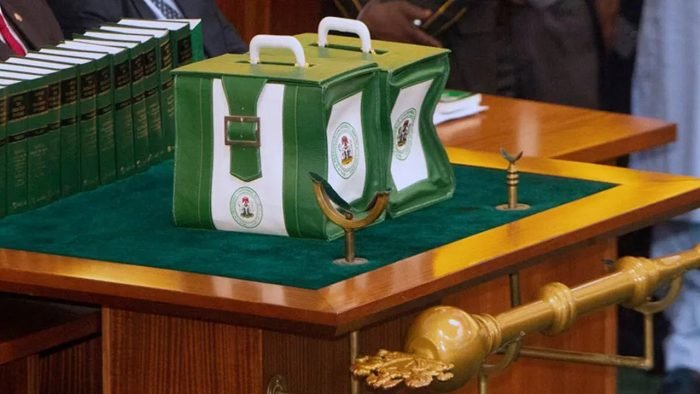
President Bola Tinubu’s 2026 Appropriations Bill reflects a significant increase in fiscal ambition compared to 2025, with a larger budget deficit and more cautious macroeconomic assumptions.
The proposed expenditure for 2026 is set at ₦58.18 trillion, a notable rise from ₦49.7 trillion in 2025, showing the administration’s focus on consolidating reforms and sustaining economic recovery.
However, expected revenue is slightly lower at ₦34.33 trillion compared to ₦34.82 trillion in 2025, widening the fiscal gap.
As a result, the budget deficit is projected to reach ₦23.85 trillion, or 4.28 percent of GDP, up from ₦13.08 trillion in 2025, indicating increased reliance on borrowing.
Capital expenditure has increased to ₦26.08 trillion, underscoring continued investment in infrastructure and productive sectors, while debt servicing rose to ₦15.52 trillion, reflecting the growing debt burden. Recurrent non-debt expenditure remains broadly steady at ₦15.25 trillion.
Macroeconomic assumptions for 2026 are more conservative, with the oil price benchmark lowered to $64.85 per barrel from $75 in 2025, oil production reduced to 1.8 million barrels per day from 2.06 million, and a slightly improved exchange rate assumption of ₦1,400 per dollar from ₦1,500. GDP growth of 3.98 percent in Q3 2025 and external reserves at $47 billion, a seven-year high, suggest a gradual economic recovery.
Sectoral allocations show an increase in defence and security funding to ₦5.41 trillion from ₦4.91 trillion, while infrastructure spending decreased to ₦3.56 trillion from ₦4.06 trillion. Education and health allocations were maintained at ₦3.52 trillion and ₦2.48 trillion, respectively.
The budget also highlights targeted social and development initiatives, including healthcare funding at 6 percent of the total budget, support for over 780,000 students under the education loan scheme, plans to cultivate one million hectares for food security, and $500 million in U.S.-backed health interventions, reinforcing the government’s National Renewal agenda amid tighter fiscal conditions.