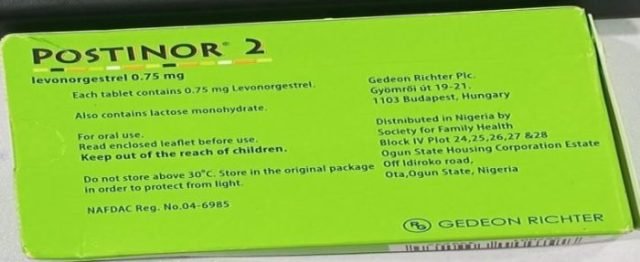
The National Agency for Food and Drug Administration and Control (NAFDAC) has raised an alarm over the circulation of counterfeit Postinor-2 (Levonorgestrel 0.75mg) emergency contraceptive pills in Nigeria, urging consumers and healthcare providers to exercise caution.
In a statement released on August 22, 2025, NAFDAC said investigations by the Society for Family Health (SFH), the product’s Marketing Authorization Holder (MAH), confirmed that certain batches of Postinor-2 in circulation were not imported by the company and are therefore counterfeit.
The agency identified two types of fake products:
- Type 1: Batch number T36184B, manufactured August 2024, expiring August 2028.
- Type 2: Batch number 332, manufactured March 2023, expiring February 2027.
NAFDAC noted visual differences in packaging, including smaller font sizes on pin verification stickers and errors such as “Veify” instead of “Verify” and “Distnibuted in Nigeria” instead of “Distributed in Nigeria.”
“Due to the potential presence of incorrect, substandard, or harmful ingredients, improper dosages of levonorgestrel, and a lack of sterile manufacturing conditions, these falsified products pose significant risks to individual health and public safety,” the agency stated.
The risks include failure of contraceptive effect, toxic contaminants, unpredictable side effects, and potential long-term reproductive health impacts. NAFDAC emphasized that counterfeit medicines are unregulated, untested, and illegal, making their safety and efficacy impossible to guarantee.
The agency has directed all zonal directors and state coordinators to conduct surveillance and remove counterfeit Postinor-2 products from circulation.
Distributors, retailers, healthcare professionals, and consumers are advised to purchase the medicine only from licensed suppliers and verify the product’s authenticity before use.
Suspected cases of substandard or falsified medicines can be reported to the nearest NAFDAC office, via the toll-free line 0800-162-3322, or by email at sf.alert@nafdac.gov.ng. Adverse reactions can also be reported through NAFDAC’s e-reporting platforms or the Med-Safety mobile app available on Android and iOS.