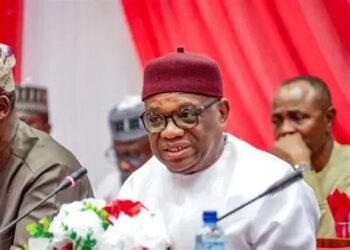
Speaker of the House of Representatives, Dr. Abass Tajudeen, has raised alarm over Nigeria’s rising public debt, which reached ₦149.39 trillion (about US$97 billion) in the first quarter of this year. Domestic borrowing accounts for 53 per cent, while external debt makes up 47 per cent.
Speaking at the opening of the 11th Annual Conference and General Assembly of the West Africa Association of Public Account Committees (WAAPAC) at the National Assembly complex in Abuja on Monday, Tajudeen highlighted that this figure marks a sharp increase from ₦121.7 trillion the previous year, underscoring the rapid growth of the debt burden.
He expressed particular concern over the debt-to-GDP ratio, now at roughly 52 per cent, significantly above the statutory ceiling of 40 per cent stipulated by Nigerian law. Tajudeen argued that this breach signals serious risks to fiscal sustainability, calling for stronger oversight, transparent borrowing practices, and a commitment to ensuring that every naira borrowed produces tangible economic and social returns.
Expanding the discussion to the continent, the Speaker noted that Africa’s total public debt reached an estimated US$1.8 trillion by 2022, with external debt alone projected to exceed US$1 trillion by 2023. Several countries are now in critical debt-to-GDP territory: Sudan at 344 per cent, Angola at 136.8 per cent, Ghana at 84 per cent, Kenya nearly 70 per cent, and South Africa over 77 per cent. In many cases, debt servicing is consuming more resources than essential public services, shrinking the fiscal space for development.
Tajudeen highlighted the composition of Africa’s debt, revealing that Western private lenders hold about 35 per cent, multilateral institutions like the World Bank and IMF account for 39 per cent, bilateral government loans make up 13 per cent, and Chinese creditors hold only 12 per cent. “In 2019, bondholders alone represented 27 per cent of Africa’s external debt, making them the largest creditor group, ahead of China at 13 per cent. A significant share of national revenues is tied to debt servicing rather than roads, schools, hospitals, and innovation,” he said.
He warned that the high cost of commercial loans and foreign currency repayments makes African economies vulnerable to market shocks, narrowing fiscal space, limiting domestic policy options, and slowing sustainable development. Tajudeen stressed the need for Africa to negotiate fairer borrowing terms, reduce dependence on external finance, mobilize domestic resources, promote intra-African trade, and create financial instruments aligned with the continent’s development priorities.
Concluding, he called on participants to strengthen oversight of public debt through empowered Public Accounts and Finance Committees, arguing that vigilance, expertise, and institutional strength are crucial to protect African economies from reckless borrowing and build long-term economic resilience.