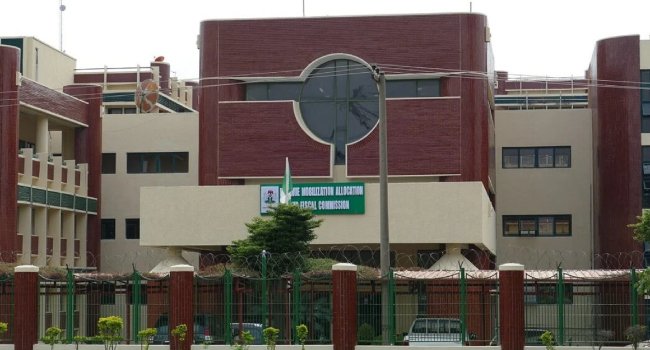
The Revenue Mobilisation Allocation and Fiscal Commission (RMAFC) has unveiled plans to review the salaries of political office holders, describing current pay as outdated, inadequate, and unchanged since 2008.
Speaking at a press briefing in Abuja, RMAFC Chairman Mohammed Shehu revealed that President Bola Tinubu earns N1.5m monthly, while ministers receive less than N1m — figures he called “a joke” given the scope of their responsibilities. Shehu argued that ministers and top officials cannot be expected to perform optimally while earning far less than agency heads, such as the CBN governor or directors of major parastatals.
The Nigeria Labour Congress (NLC) opposed the proposal, citing rising poverty, inequality, and hidden allowances that already inflate political earnings. A senior NLC official told The PUNCH that the president’s official salary of N1.5m is supplemented by allowances pushing his total package to over N100m, while senators and representatives reportedly earn up to N30m monthly. Labour argued that while politicians live in luxury, civil servants survive on a minimum wage of N70,000 and professors earn less than N400,000, urging funds to be redirected to hospitals, schools, and job creation.
In addition, Shehu announced that RMAFC has begun reviewing Nigeria’s outdated revenue-sharing formula, which currently allocates 52.68% of federally collected revenue to the Federal Government, 26.72% to states, and 20.60% to local governments — unchanged since 1992.
The review, Shehu said, will be “inclusive, data-driven, and transparent,” involving the Presidency, National Assembly, state governors, civil society, and development partners. The goal is to give states more resources for economic growth while maintaining fiscal equity.
Finance expert Professor Uche Uwaleke recommended that any additional funds to states be ring-fenced for infrastructure and social development projects, rather than recurrent spending. He also suggested adjusting allocations between states and benchmarking Nigeria’s formula against international federal systems like Canada, Brazil, and India.
Despite previous failed attempts under past administrations, Shehu assured that the review will proceed under the Commission’s new financial autonomy and constitutional mandate.