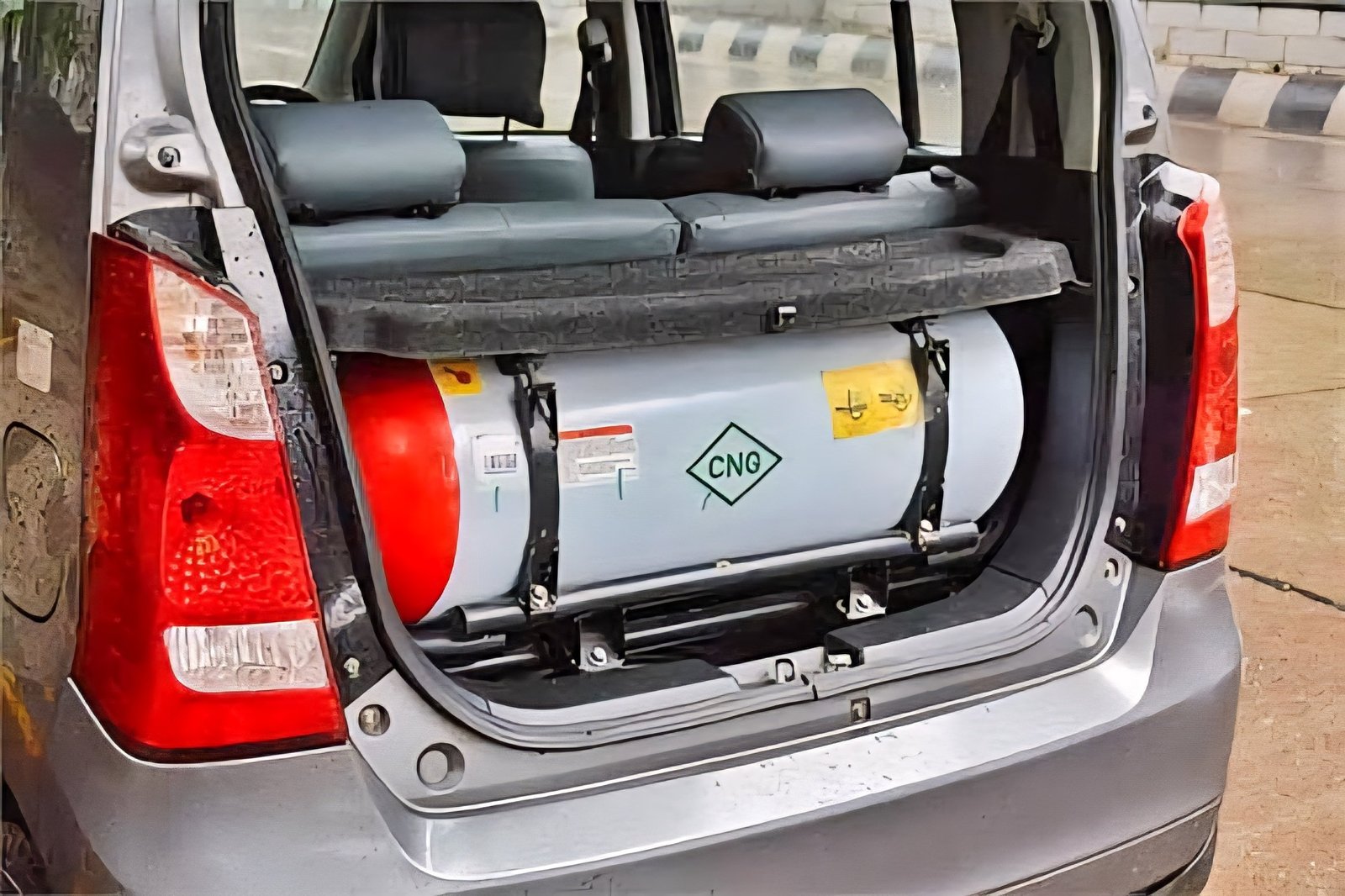
The price of Compressed Natural Gas (CNG) has surged from N230 to N450 per standard cubic metre amid long queues and limited refuelling stations, sources say. Retailers told our correspondent that the government recently reviewed the price, reducing its subsidies.
While truck operators now pay N450/SCM, car and commercial drivers still enjoy partial subsidies, paying N380 per standard cubic metre for what the government promotes as a cheaper alternative to petrol and diesel.
The Programme Director of the Presidential Compressed Natural Gas Initiative (PCNGI), Michael Oluwagbemi, did not respond to calls on Tuesday. However, a PCNGI official, speaking on condition of anonymity, confirmed the new pricing structure, explaining that commercial vehicles benefit from lower rates to prevent transport costs from rising.
“The refuelling stations now sell at different prices for cars and trucks. The price depends on the type of vehicle, whether it is a commercial bus, a truck, or a private car,” the official said. He added that while subsidies are intended across the board, the current approach targets commercial vehicles, with trucks paying higher rates and passenger vehicles enjoying reduced fees.
The official stressed that increasing the number of refuelling stations remains the PCNGI’s priority. “Our main focus is to expand availability of gas. We want more CNG stations nationwide so that converted vehicle owners do not have to rely on petrol due to shortages,” he said.
A major CNG retailer, speaking anonymously, confirmed that NNPC Gas Marketing Limited (NGML) reviewed the prices. He noted that since petrol subsidies were removed in 2023, the government had capped CNG prices below cost to attract users and may soon raise rates to N500 or N600 per SCM to encourage investment.
Meanwhile, concerns are growing that vehicle owners may abandon CNG if queues persist and prices continue to climb. Adeyemi Paul, a ride-hailing driver, said, “Some spent up to N1.5m converting their petrol-powered vehicles to CNG. Now with the price hike and long queues, many may return to petrol. The difference between CNG and petrol isn’t significant in reality.”
Efforts to contact Louis Ibah, spokesman for the Minister of Petroleum Resources (Gas), Ekperikpe Ekpo, were unsuccessful, as he was at a function with the minister. NNPC also could not be reached following the announcement of a new spokesperson.
CNG was promoted as an affordable alternative after President Bola Tinubu removed the fuel subsidy in 2023, which caused petrol prices to rise from N175 to N870 per litre. By June 2025, over 100,000 petrol-powered vehicles had been converted to CNG.
Oluwagbemi highlighted the initiative’s growth, noting that CNG-powered vehicles increased from fewer than 4,000 to nearly 100,000 within a year. Conversion centres rose from seven to 265 nationwide, direct jobs exceeded 10,000, and operational refuelling stations grew from 20 to 60, with 175 more under development. He said an additional 100 stations are expected to be commissioned within three months.
Defending the pace of implementation, Oluwagbemi said, “Rome wasn’t built in a day. Those who led Nigeria into the fuel subsidy crisis cannot fairly criticise the speed at which we’re addressing it.” Yet, analysts warn that the latest price increase may discourage CNG adoption.