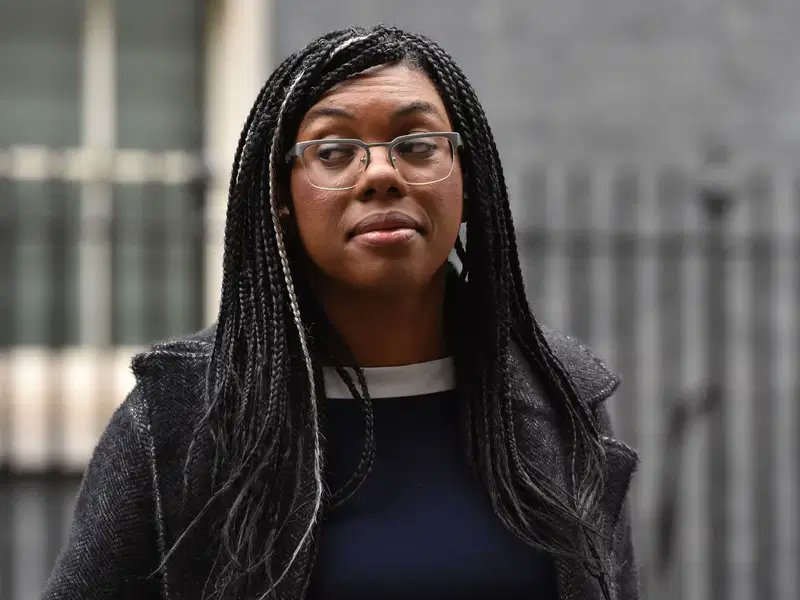
Kemi Badenoch has spoken openly about the racism she has encountered as the first Black woman to lead the Conservative Party, admitting she was shocked by the scale of the abuse.
In an interview with The Sunday Times, Badenoch said she had not expected such hostility after becoming Tory leader, despite her previous belief that Britain is “the best place in the world to be black.”
“There’s a certain cadre of people who clearly can’t cope with the fact that I won this and I’m doing it. The level of personal attacks from anonymous people, it’s hysterical. Not even just from MPs. I actually don’t think it’s that many MPs. I think it’s two to three people out of 120. That’s nothing. But online as well. People used to talk about Trump derangement syndrome. I think there’s a Kemi derangement syndrome: ‘How could she possibly have done this?’” she said.
She added that social media has been rife with “ethno-nationalism,” with critics suggesting she could not have achieved success on her own.
Badenoch, who has previously said she no longer identifies as Nigerian, has been outspoken against anti-racism activism and critical race theory.
“I always try to think of every possible explanation before I go to race and racism. I think that is a healthy way to run a society. I remember when I stood up a few years ago and said Britain is not a racist country – ethnic minorities do very well here, it is white working-class boys who are actually struggling on a lot of metrics, and I got pilloried for that. My view is that there are people out there who will say whatever it is, they will throw whatever kind of mud at you and they will hope that it sticks,” she told The Sunday Times.
Her remarks come as she prepares for her first party conference speech, with Conservative support polling at just 17% and rumors swirling of a possible leadership challenge from shadow justice secretary Robert Jenrick.
On speculation about her being replaced, Badenoch dismissed it as “wishful thinking,” saying, “There will always be people who are sore losers, our candidate didn’t win, and so on, and sour grapes … When I hear those things, I can tell those people are not focused on the country at all. Many of those people having those conversations think this is a game. But the lives of people in this country aren’t a game.”